
Online European Roulette in UK Casinos: Rules and Odds
 Available in GB

A practical guide to European roulette, from its single-zero wheel and payouts to live play, demos and the limits of betting systems.
The European Wheel: Thirty-Seven Pockets, One Zero
European roulette is built around a small asymmetry. Its wheel has thirty-seven pockets: the numbers from 1 to 36, plus one green pocket marked zero. The numbered pockets are divided between red and black; zero belongs to neither colour. That single exception gives the game its defining arithmetic and distinguishes the wheel from a simple contest between two equal groups.
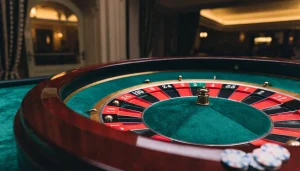
The wheel turns above a shallow bowl. A ball travels around its rim, loses speed and eventually drops into one of the pockets. Until it settles, every numbered compartment remains a possibility. The spectacle is physical and almost old-fashioned: a moving object, a measured pause, a result that arrives without explanation. The mathematics, by contrast, is exact. There are thirty-seven possible destinations, and one of them is the zero.
That green pocket is not decorative. It is the reason the apparent balance of red against black, or one half of the numbers against the other, is not a perfectly even proposition. A zero is outside those groupings. It does not become red or black simply because the ball has landed there, and it does not fit into the familiar divisions of odd and even or low and high. The wheel keeps its own category, and the game’s calculations account for it.
Mines Casino Game in the UK: Rules, Risk and Play
For a European wheel, the house edge is 2.70%. The figure describes the casino’s mathematical advantage over time, not a prediction about what will happen in an individual spin. A result can favour a player, or not; the wheel has no memory of either outcome. The edge is a feature of the rules applied across repeated play, rather than a promise that the casino wins each time. Chance remains untidy in the short term. The arithmetic is not.
This distinction matters because roulette is unusually good at making chance look legible. The wheel is visible, the pockets are numbered, and the ball’s path can be watched. Those details create a sense that the result might be read before it arrives: a favoured section, a familiar rhythm, a run that seems to be turning. Yet the physical theatre does not alter the underlying structure. Each spin ends in one pocket, and the presence of the zero is built into the calculation whether it has appeared recently or not.
Online Casino Tournaments UK: Free Entry Explained
The term “European roulette” therefore refers first to the wheel’s arrangement of possibilities, not to a special atmosphere or a particular way of playing. In an online casino, the same basic structure can be presented on a screen, but the defining feature remains the single zero alongside the thirty-six numbered pockets. The appearance may change; the arithmetic does not. That is the useful point of recognition when looking at European roulette online: the name matters less than the wheel it describes.
Casinos have long made games from ordered uncertainty. Roulette gives that uncertainty a visible centre: a turning wheel around which players and spectators gather, waiting for a small object to stop. The zero marks the boundary of the familiar categories and, at the same time, the point at which the house edge becomes apparent. A single pocket can carry a great deal of institutional weight. It is the quiet hinge on which the game’s balance turns.
The same structure explains why a European roulette casino can offer an experience that feels simple without being mathematically neutral. There are no hidden destinations in the wheel’s stated design: thirty-six numbered pockets and one zero. But simplicity is not equality. The zero sits apart from the numbered groups, and the house edge reflects that arrangement. Understanding the wheel begins there, before any question of how a particular table presents the game.
In Britain, online versions bring this traditional shape into a setting governed by modern gambling rules, but the wheel itself needs no digital invention. Its appeal lies in the plainness of the event: a ball, a circle, a set of pockets and a result. The arrangement has survived because it makes randomness easy to watch, even when watching cannot make it predictable. There is the whole bargain, visible in green.
What “Best” Means in a UK Roulette Casino
When choosing an online casino for European roulette in the UK, it helps to check practical details alongside the game itself. This list gives a concise reference point for payout speed.
1. Britsino
Payout speed: 1-3 business days Britsino lists a payout speed of 1–3 business days.
2. x3bet
Payout speed: 1-3 business days x3bet lists a payout speed of 1–3 business days.
3. Amunbet
Payout speed: 1-3 business days Amunbet lists a payout speed of 1–3 business days.
4. BeOnBet
Payout speed: 1-3 business days BeOnBet lists a payout speed of 1–3 business days.
5. SlotoSport
Payout speed: 1-3 business days SlotoSport lists a payout speed of 1–3 business days.
6. Chanze
Payout speed: 1-3 business days Chanze lists a payout speed of 1–3 business days.
7. Dieselwin
Payout speed: 1-3 business days Dieselwin lists a payout speed of 1–3 business days.
8. Revery Play
Payout speed: 1-3 business days Revery Play lists a payout speed of 1–3 business days.
9. NightWin
Payout speed: 1-3 business days NightWin lists a payout speed of 1–3 business days.
10. WinBeast
Payout speed: 1-3 business days WinBeast lists a payout speed of 1–3 business days.
A good European roulette casino is not simply a site with a familiar green table on its games page. The more useful test is whether the conditions around the game are clear: who is responsible for offering it, what information is available before play, and whether the account comes with meaningful controls. “Best” is less a crown than a paper trail.
In Great Britain, the UK Gambling Commission (UKGC) is the sole regulator of online casino activity. Operators selling remote gambling to the British market must hold the relevant UKGC licence, wherever they are based. A platform without a valid UKGC licence cannot legally offer real-money live roulette to British residents. Offshore access may be technically possible; it does not make the operator part of the British regulatory system.
The licence is a starting point, not a substitute for checking. The UKGC’s public register lets customers verify an operator’s status and licence details before depositing. A site’s own claims should lead back to that record, rather than stand in for it. This distinction can seem administrative, but regulation matters most when something goes wrong: UKGC licensees must provide an internal complaints process and access to an approved Alternative Dispute Resolution service.
Checking Casino Legitimacy
- Verify the operator’s status on the UKGC public register
- Confirm the presence of a valid UKGC licence
- Locate the specific RTP and rules for the roulette game
- Check for available account-level financial limits
- Identify the internal complaints process and ADR service
Game information deserves the same scrutiny. RTP—return to player—is a statistical measure associated with a game, not a promise about the result of an individual session. For European roulette, a UKGC-licensed operator should make relevant RTP information accessible, so it can be found and understood before play rather than buried behind a game launch. Clear presentation matters: the figure should relate to the specific game, and the accompanying rules should explain how that version operates. A search result or promotional label is no replacement for the game’s own information.
Availability is another practical test. A casino may advertise roulette broadly while offering only a limited selection, or may make it difficult to tell whether a listed title is a roulette game or a product borrowing the name. The game catalogue and its rules should establish what is actually available. A European roulette table is not interchangeable with every product carrying “roulette” in its title. The distinction belongs in the description, not in guesswork.
The quality of the surrounding account controls is just as revealing. Operators must verify a customer’s age before allowing a deposit, and remote operators must prompt new customers to set a financial limit before their first deposit. Account-level limit controls must remain accessible afterwards. UKGC-licensed live casino operators must also offer deposit limits, loss limits, session time reminders, reality checks, cool-off periods and GamStop self-exclusion. These are not decorative links in a footer; they are part of the regulated service.
Payment rules provide another clue to whether a casino is operating within the British framework. UKGC-licensed casinos cannot accept credit cards for gambling, including where credit-card funds are routed through a money service business. They also cannot accept wallet payments if that wallet allows credit-card funds to be used for gambling. The restriction is designed to prevent a borrowing route from being disguised as an ordinary payment method.
Operators are also required to contribute to the Research, Education and Treatment levy. That obligation sits behind the individual account, but it reflects a broader bargain: access to commercial gambling is permitted within a system that imposes duties on the businesses offering it. Licensing is not an endorsement of a particular casino’s style or catalogue. It is a condition of lawful operation, with continuing responsibilities attached.
Do
- Check the UKGC public register for licensing
- Inspect the game’s specific RTP and rules
- Set financial limits before the first deposit
- Verify payment methods comply with UKGC rules
Don’t
- Trust promotional labels over game information
- Use credit cards for gambling deposits
- Ignore the game weighting in bonus terms
- Rely on betting systems to predict outcomes
A sensible assessment therefore looks beyond a banner promising the best roulette experience. It checks the licence on the public register, finds the game’s RTP and rules, confirms that European roulette is genuinely offered, and inspects the controls available inside the account. Complaints routes and payment restrictions complete the picture. None predicts whether a session will be enjoyable or profitable. They do show whether the operator is accountable for the conditions it has chosen to provide.
From the Layout to the Payout
A European roulette table is easier to read once its two working areas are separated. The numbered grid is the place for bets on particular numbers or small groups of them. Around it sit the outside-bet boxes: broader choices that cover colour, parity or a range of numbers. The layout is not a map of the wheel’s physical order. It is an accounting surface, arranged so that bets can be placed and settled in a shared space.
The green zero has its own position at the edge of the grid. The other numbered spaces run from 1 to 36 in three vertical columns. Beside and below that grid, the table marks the outside options. In an online game, the same structure appears on screen, whether the table is compact on a phone or spread across a larger display. The proportions may change; the logic does not.
Bets placed on the grid
The most precise inside bet is the straight-up bet: a chip placed directly on one number. It wins only if the ball settles in that pocket, and its payout is 35:1. That figure describes the winnings, not the stake returned alongside them. The long odds are the table’s way of acknowledging how narrow the selection is; they do not make the result less dependent on chance.
Online Bingo UK: Tickets, Patterns and Slot Games
A split bet sits on the line between two adjacent numbers. It covers either number and pays 17:1 if one of them wins. The placement can look fussy on a touchscreen, where the difference between a number square and its border matters. The border is not decoration: it is the betting point. A chip placed in the wrong part of the grid may register as a different bet, so digital tables generally show the selected area before the wager is confirmed.
The street bet covers a horizontal row of three numbers and pays 11:1. Its position is at the end of that row, rather than on a single number or the dividing line between two. The visual grammar is consistent: a chip centred in a number square selects one pocket; a chip on a shared boundary covers the spaces joined by that boundary. The table turns geometry into a contract.
Other inside placements can cover wider groups, but the essential reading habit remains the same: identify which spaces the marked position includes, then check the displayed selection. A crowded grid can make a small placement look ambiguous, especially when several chips are already down. Online interfaces often highlight the covered numbers, which is more useful than trusting a tiny chip to explain itself.
Bets placed outside the grid
Outside bets exchange precision for breadth. Red or black, even or odd, and high or low each cover a large set of numbered outcomes, and each pays 1:1. A winning bet therefore returns winnings equal to the amount staked, with the stake itself also accounted for in the settlement. These choices are visually distinct from the numbered grid, often arranged in broad boxes along its lower or side edges.
Red or Black
Covers a large set of numbered outcomes and pays 1:1.
Even or Odd
Divides outcomes by parity and pays 1:1.
High or Low
Divides outcomes by range and pays 1:1.
The terms are straightforward, but their boundaries still matter. A red bet concerns the table’s red-number spaces, not a judgement about the ball’s path. Even and odd divide the numbered outcomes by parity; high and low divide them by range. Zero is not red or black, even or odd, high or low. A broad selection is not an all-covering one.
That distinction is easy to miss when a table is first encountered. The outside area looks like a set of reassuringly large targets, while the grid looks like the place for elaborate choices. Yet every selection has a defined set of covered outcomes, and the payout reflects the bet category rather than the dramatic appearance of the chip placement. A small, exact bet can return a larger multiple; a broad bet returns less when it wins.
Reading what a win means
Roulette payouts are commonly written as odds against the stake. A 35:1 straight-up win means the stated winnings are thirty-five times the stake; the original stake is returned as part of the settlement. The same convention applies to the 17:1 split and 11:1 street payouts. For the 1:1 outside bets, winnings match the stake. This distinction between winnings and total return prevents a frequent misunderstanding: the payout notation does not normally include the original chip in the quoted odds.
A table’s paytable or rules panel is the final reference for how its interface settles a wager. That is especially useful where a game has a special feature or a modified paytable, since familiar-looking graphics do not guarantee that every bet pays in the standard way. The layout tells where a bet is made; the rules tell what happens when it wins.
Live Dream Catcher Casino UK: How the Format Works
The phrase “European roulette casino table” can suggest a special class of table, but VIP presentation does not alter the meaning of the basic placements described here. A polished interface, a private-looking room or a higher-stakes setting may change the atmosphere. It does not make a straight-up bet cover more numbers, nor turn an outside selection into certainty. The grid remains a grid.
For someone learning how to play European roulette online, the useful sequence is modest: locate the intended space, confirm the covered number or group, note the payout attached to that bet, and only then commit the chip. Free-play versions can let a newcomer explore the screen without staking money, but the important lesson is still the same one the paid table imposes: placement has a precise meaning.
The table is a diagram of choices, not a forecast. It shows which outcomes a bet includes and how a winning selection is paid. Nothing in the arrangement makes a particular square more likely to be chosen. A neat chip placement is not a prediction.
Single Zero, French Rules and the Limits of a System
A single-zero wheel gives the rules a narrow but important point of intervention: the zero. On an ordinary European table, its presence contributes to the house edge. French rules alter what happens to certain wagers when the ball stops there, rather than changing the odds from spin to spin. The distinction is easy to miss. It is also where a small rule can make a measurable difference.
La Partage
This rule reduces the house edge on even-money bets to 1.35% by returning half the stake if the ball lands on zero.
La Partage applies to even-money bets. If the ball lands on zero, half of the stake on such a bet is returned instead of the whole wager being lost. The rule reduces the house edge on those bets to 1.35%. It does not make a result more likely, or turn an unfavourable wager into a favourable one; it softens the cost of one particular outcome.
That qualification matters. La Partage concerns even-money bets, not every choice on the table. A player considering inside bets or other roulette betting options should not assume the same treatment applies across the board. The rule is attached to a specific class of wagers. French roulette has the lowest house edge among standard variants because of La Partage and En Prison, but the advantage lies in the rules, not in any secret quality of the wheel.
A rule can soften a loss. A system cannot soften chance.
The appeal of betting systems is more psychological than mathematical. They offer a sequence to follow when a game offers no reliable way to know what comes next. The Martingale is the familiar example: after every loss, the next stake is doubled, in the hope that a later win will recover the earlier losses. The procedure is simple enough to seem reassuring. Its simplicity does not make the outcome predictable.
A losing streak can damage a player’s bankroll as the required stakes grow. Each new bet still faces an uncertain result; previous losses do not tell the wheel what to do. Roulette outcomes are determined by chance, so no strategy can predict the final result. A pattern noticed in past spins may feel persuasive, but it supplies no command over the next one.
Chicken Road Game in UK Casinos: What to Know
This is why rules and systems need to be kept separate. La Partage is a feature of the game’s terms: when zero appears, it changes the settlement of an even-money wager. Martingale is a staking plan imposed by the player: it changes the size of later bets, not the chance of a winning result. One changes the exposure attached to a particular outcome. The other changes how much money is at risk while outcomes remain uncertain.
French rules can therefore reduce the house edge on qualifying bets without abolishing it, while a betting progression can make losses accumulate without improving the odds. The wheel remains indifferent to a player’s sequence, however carefully arranged. That is the limit of a system.
RNG, Speed and the Wheel on Screen
An online European roulette game can present the familiar wheel and betting layout without showing a physical wheel at all. In RNG roulette, software uses a random number generator to determine each result, then renders the spin on screen. The animation gives the outcome a visible form; the underlying event is a software calculation.
That distinction changes the rhythm of play. There is no need to wait for a ball to be released and settle, so RNG games can move quickly from one spin to the next. Their minimum stakes can also be lower: some begin at 10p. A small entry point may make the format feel casual, though a faster sequence can also mean that decisions and wagers accumulate with less pause.
RNG vs Speed Roulette
RNG roulette uses software calculations to determine results, allowing for faster play and lower minimum stakes (some from 10p). Speed roulette specifically compresses the interval between rounds, with some versions running at over 150 spins per hour.
Automated formats occupy a related but not identical place. They reduce the human staging around a spin, while speed roulette is designed to compress the interval between rounds. A specialist review has reported speed roulette running at more than 150 spins an hour, against 80–100 at a standard table. Those figures describe the pace reported for the formats, not a promise that every game or session will match it. Speed is a feature of the schedule, not an improvement in the odds.
Minimum stakes vary by format and table. A specialist casino review has reported UK live tables starting from 10p, while some auto-roulette and speed games have offered entry at 5p. These are reported starting points rather than fixed prices across casinos. The practical difference is less about the wheel’s appearance than the terms attached to a particular game.
On screen, European roulette may be represented by a complete animated wheel, a compact spin graphic or a more pared-back result display. The interface can make the game feel like a miniature casino ritual, even when its motion is only a visual rendering of an RNG result. Automated presentations may instead foreground the sequence of rounds, keeping the table available while the game advances.
A European wheel with its green zero remains recognisable in either kind of display, but the image alone does not establish how the result is produced. Game information should make clear whether the outcome comes from an RNG or from an automated table format. That distinction matters to anyone choosing between a simulated spin and a more visibly staged one.
Keno Casinos in the UK: Games, Odds and Play
Faster play has a social consequence: fewer pauses in which a player might reconsider or simply look away. A slower interface cannot change chance, and a rapid one cannot make it more favourable. It can only shorten the time between choices. A modest difference on screen; a real difference in pace.
Live Roulette and the Human Dealer
Live European roulette puts a physical wheel on screen rather than asking software to simulate one. A studio camera follows the dealer, the wheel and the ball’s descent; the result comes from that visible sequence. The format borrows the public ritual of a casino table, then carries it into a private room where the only crowd may be a stream of usernames.
That human presence changes the texture, not the underlying uncertainty. The dealer sets the pace and handles the wheel, while the camera makes the procedure legible. There is no need to mistake a polished broadcast for a guarantee: the ball still settles where chance takes it.
In Britain, the stream also sits inside a regulatory framework. A platform without a valid UK Gambling Commission licence cannot legally offer real-money live roulette to British residents. Before depositing, the licence number can be checked on the Commission’s public register. UKGC-licensed operators must verify a customer’s age before allowing a deposit.
The rules reach beyond the wheel. Live casino operators must provide deposit and loss limits, session-time reminders and reality checks, as well as cool-off periods and GamStop self-exclusion. New customers must be prompted to set a financial limit before their first deposit, with account-level controls available afterwards. These are not decorations around the table; they are part of the conditions under which licensed play is offered.
Licensing Risk
A platform without a valid UK Gambling Commission licence cannot legally offer real-money live roulette to British residents.
A limit can mark a boundary; a reminder can interrupt the smooth passage from one spin to another. Their purpose is especially plain in a live stream, where a dealer’s steady cadence can make continued play feel like the natural next step. The controls belong to the operator’s wider duty, not to the dealer’s discretion.
For anyone choosing a live European roulette casino, the human dealer is therefore only one part of the experience. The licence and the available safeguards matter just as much. The spectacle is real. So is the obligation to make stopping possible.
Demo Spins, Real Money and Bonus Small Print
A free European roulette demo removes the financial consequence of a spin, not the rules of the game. It can show how a table operates and let someone practise placing bets, but demo credits cannot be withdrawn as winnings. Real-money European roulette is different in kind: deposits are at stake, and any bonus attached to an account brings conditions of its own.
That distinction matters because a bonus is not simply extra cash available for any game. Its terms can specify which games count towards wagering requirements and how much each wager contributes. Roulette can therefore be playable with bonus funds while doing relatively little to clear the requirement.
The weighting depends on the operator and the format. A broad description of UK casino terms puts roulette wagers at 10% to 20% of bonus wagering requirements. A specialist review gives a sharper format-based illustration: live roulette may be weighted at 10% or 20%, while RNG roulette may count at 100%. These are not universal rates; the terms for a particular offer decide what applies. A large-looking bonus can be less useful for roulette than its headline suggests.
Progressive Jackpot Slots: How the Prizes Grow
Small print, large effect. If a wager contributes only a fraction of its value, the remaining requirement takes longer to meet than the headline amount alone might imply. Some offers also exclude particular games or bonus funds altogether. The practical question is not merely whether roulette is available, but whether bets on the chosen format qualify, at what game weighting, and under what conditions winnings can be withdrawn.
Since January 2026, regulations for UK-licensed operators cap bonus wagering requirements at 10x. That ceiling limits how high the requirement can be; it does not make every offer equivalent, nor does it set roulette’s game weighting. Both figures matter: the wagering multiple describes the total play required under the offer, while weighting determines how much an eligible roulette wager counts towards it.
Free online European roulette avoids bonus terms because no bonus funds are being wagered. A European roulette demo is therefore useful for learning the interface or trying a game without spending, but it cannot test whether a real-money promotion treats that game favourably. A roulette-themed slot demo is a separate product again: its label does not turn slot play into roulette or make the two games’ bonus terms interchangeable.
Before using bonus funds for real-money play, the offer’s rules should make clear which roulette format qualifies, its game weighting, and any withdrawal conditions. When those details differ between live and RNG games, the distinction is not cosmetic. It is part of the price of the promotion.
Bonus Weighting
Roulette wagers often contribute only 10% to 20% towards bonus wagering requirements, meaning they clear bonuses slower than other games.
Roulette in the Shape of a Slot
The phrase “roulette slot” can point in two directions. It may mean a slot game borrowing roulette’s name or imagery, or a roulette game presented with extra visual effects. Neither description makes the products interchangeable. A slot has its own reels, symbols and paytable; a roulette game follows the rules stated for its particular table. The label is not a rulebook.
Book of Dead illustrates the first category: it is a slot title, not a European roulette wheel. Its presence in a casino’s games list says nothing about roulette’s probabilities or payouts. A product’s name can evoke a familiar game while its underlying structure belongs to another one entirely. The distinction matters most when a player sees a roulette-themed title and assumes that the usual roulette odds apply.
XXXtreme Lightning Roulette, by contrast, is a roulette-branded game, not evidence that every “roulette slot” is a slot in the technical sense. Its special features can affect the terms shown for particular bets. A specialist review reports that, without a lightning multiplier, a straight-up bet in Lightning Roulette pays 29:1 rather than the standard 35:1. That is a product-specific condition, not a general rule for European roulette. The game’s own rules and paytable are the relevant documents.
Names such as “gold”, “platinum” or “3D” can also describe presentation or branding rather than a recognised roulette variant. A polished table, animated wheel or metallic theme does not establish that a game uses European roulette rules. Nor does a roulette motif turn a slot’s reels into a wheel. The useful distinction is not between more and less elaborate graphics, but between the game’s actual format and the atmosphere built around it.
That separation is especially important where slot rules apply. In Britain, online slots cannot autoplay, and every spin must last at least 2.5 seconds. Those requirements belong to slots; they should not be treated as roulette rules merely because a slot borrows roulette imagery. Conversely, a roulette title does not become a slot just because it has dramatic animations or a branded name.
Online Casinos Without ID in the UK: What It Means
European roulette odds therefore belong to games that actually use European roulette rules, not to every product carrying the word “roulette”. A title can advertise a mood. Its paytable tells a more consequential story.
European, American and the Cost of an Extra Zero
The difference between European and American roulette is small enough to fit in a single pocket, but large enough to change the game’s house edge. A European wheel has numbers 1 to 36 and one zero: 37 pockets in all. Its house edge is 2.70%. The American version adds a double zero, making 38 pockets and raising the edge to 5.26%.
That extra green space matters because it gives the casino another outcome on which ordinary bets lose. The numbers on the layout may look familiar, and the game still turns on a ball and a spinning wheel, but the balance of probabilities has shifted. The American format is not simply a European roulette game with a different label.
For anyone comparing an online European roulette casino game with an American table, the house edge offers a concise measure of that difference. It describes the casino’s statistical advantage over time, not the result of any individual spin. A run of wins or losses can still unfold either way; the extra zero changes the underlying terms, not the sequence a player will see next.
There is also a less common variation to notice. A specialist affiliate review reports an American table with a third green pocket marked 000 and a house edge of 7.69%. That is a report about a particular table, not a standard feature of American roulette or an established description of UK online casino games. Its presence, where offered, makes the cost of the additional green space steeper still.
The comparison is therefore less about the names attached to the wheels than about what each pocket does to the odds. European roulette keeps the casino edge lower; American roulette increases it with the double zero. The 000 variation pushes it higher again. One extra pocket, then another: a neat arrangement for the house.
BetFoxx games and software providers

BetFoxx live casino guide
BetFoxx offers live casino games, including live roulette, live blackjack and live baccarat formats. Current...

Aviator Casino Game in the UK: How Sites Differ
The guide distinguishes UKGC-licensed casinos from offshore platforms and examines play options, bonus terms, chance...

3-Reel Slots in the UK: Classic Format Explained
The familiar reel layout is a digital format, not a physical fruit machine, and it...

5-Reel Slots in the UK: How They Work
Five-reel slots bring symbols together across a shared field, while demo play, bonus features and...

Bonus Buy Slots UK: Demo Play, Rules and Features
A practical look at demo play, feature controls, slot variance and how bonus-buy options shape...

Fast Payout UK Casinos: What Keno Paytables Tell You
Keno’s paytable sets possible prizes from picks and catches, while casino withdrawal processing is a...

First-Deposit Casino Bonuses in the UK: What to Know
A first deposit links an account payment to a promotion, while eligibility, bonus value and...

High-Volatility Slots in the UK: What to Know
Volatility describes how returns are distributed over play, from frequent smaller wins to less frequent,...

Highest RTP Slots in the UK: How to Assess Claims
RTP can compare expected returns over extensive play, but it cannot predict an individual session...

Keno Casinos in the UK: Games, Odds and Play
Keno uses a shared field of 80 numbers, but game formats, selection sizes and paytables...

Live Casino in the UK: How Online Tables Work
A live casino combines a streamed table with online controls, while payment rules, game formats...

Low-Volatility Slots in the UK: How They Work
Low volatility tends to mean smaller, more frequent wins, but it does not promise a...

Online Slot Payout Percentages and What RTP Means
The percentage describes expected returns across repeated play, not a guaranteed share back on any...

Progressive Jackpot Slots: How the Prizes Grow
Progressive prizes grow from qualifying wagers, unlike fixed slot payouts that follow the values set...

RTP Casino Slots UK: How Long-Run Returns Work
RTP describes a slot’s theoretical share of stakes returned as prizes over many plays, not...

Video Slots UK: Reels, Rules and How They Play
Reels, paylines and bonus features determine how slot results are formed and how play moves...

UK Casino Dice Games: How Digital Play Works
Some online dice-style games use random-number processes to determine outcomes, while on-screen animations give those...

Chicken Road Game in UK Casinos: What to Know
A practical guide to the slot label, online play, demo limits, casino rewards and the...

Classic Slots Online in the UK: How They Work
Explore familiar reel layouts, symbols, features and browser play, while keeping in mind that classic...

Crash Casino Games in the UK: Rules and Fairness
The guide distinguishes UK-licensed casinos from offshore platforms and explains how offers, game mechanics, fairness...

Crazy Time Live Casino Game in the UK Explained
A guide to the live studio format, casino interfaces, bonus terms and the limits of...

Deal or No Deal Casino UK: How the Game Works
The article traces the game from its television origins to online play, clarifying what demos,...

Fastest Payout Online Casino UK: What Can Be Proven
A meaningful speed comparison needs a defined event, start and end points, and equivalent terms...

French Roulette Online Casinos in the UK: Rules
French roulette pairs a 37-pocket wheel with rules such as La Partage, while online formats...

Fruit Machine Slots in the UK: From Pubs to Online
The guide traces familiar fruit-machine features into digital play, including reels, symbols, holds, nudges and...

Hi-Lo Casino UK: Rules, Ties and Online Play
Hi-Lo rules vary: ties may lose or have their own wager, while online and live...

Jackpot Mobile Casinos in the UK: A Practical Guide
Jackpot labels can describe different prize structures, while mobile play, promotions and payment terms shape...

JetX Casino Game in the UK: How It Works
A closer look at JetX’s crash-game format, randomness, casino offers, platform protections and the limits...

Live Casino Lightning Roulette in the UK
A physical dealer-spun wheel supplies the result, while the stream and betting interface bring the...

Live Baccarat Online Casino UK: Rules and Tables
Baccarat compares Player and Banker hands against nine, with dealing rules shaping how each round...

Live Blackjack Online in UK Casinos: What to Know
Live play has a slower rhythm and higher minimum bets, while table options, trust checks...

Live Dream Catcher Casino UK: How the Format Works
A guide to the live-dealer setup, game mechanics and checks that matter before play. The...

Mines Casino Game in the UK: Rules, Risk and Play
The guide separates demo and real-money play, explains casino randomness, and sets out what UK...

Monopoly Live Casino UK: How Live Play Works
A practical look at the studio stream, operator suitability, game mechanics, demo play and the...

Online Bingo UK: Tickets, Patterns and Slot Games
Bingo formats, ticket stakes and slot games are explained alongside the steps from buying a...
American Roulette at UK Online Casinos: Rules and Odds
The double-zero wheel changes the table layout and the odds behind familiar roulette bets. The...

Online Casino Games for Real Cash in the UK
Learn how slot stakes and paylines shape outcomes, and why payout routes, licence status and...

Online Casino Tournaments UK: Free Entry Explained
Free-entry events remove the buy-in, while shared rules and comparable results keep the competition intact....

Online Casinos Without ID in the UK: What It Means
A UK licence requires identity and age checks, even when a casino does not request...

Penny Slots in the UK: Stakes, Free Play and RTP
A game’s penny label does not set its stake; this guide explains cash play, practice...

Plinko Casino UK: Games, Rules and Real-Money Play
Plinko labels can cover different casino formats, while a site's availability alone does not prove...

Progressive Slots Online in the UK: How They Work
Network pooling, jackpot triggers, RTP and bonus terms all affect how progressive slots work and...

UK Slot Casino Sites: Licensing, Costs and Play
Licensing, game providers, payout terms and account safeguards offer a clearer basis for assessing UK...

Live Roulette UK: How the Dealer Game Works
Live roulette shows a dealer spinning a physical wheel, while bets are placed through an...