
Progressive Jackpot Slots: How the Prizes Grow
 Available in GB

Progressive prizes grow from qualifying wagers, unlike fixed slot payouts that follow the values set in a paytable.
How a Progressive Jackpot Grows
A progressive jackpot is not simply a large prize printed beside a slot. Its value changes as play continues: a portion of each wager is diverted into a shared pool, adding to the amount available as the jackpot. In progressive jackpot slots, that contribution is typically between 1% and 3% of each wager.
The mechanism makes the prize feel less like a fixed feature of the game and more like a running account. A spin contributes whether it wins or loses; the pool grows through the stream of qualifying wagers, rather than through a prize amount set once and left untouched. The contribution is only a fraction of the stake, but repeated play supplies the accumulation.
Fixed slot payouts work differently. Their prize values are set in the game’s paytable: a winning combination pays according to the stated terms, not according to a jackpot balance that rises with wagers. A progressive prize, by contrast, has a value that can move while the game is being played. The distinction is one of funding as much as presentation.
Progressive jackpots can make a slot especially appealing, but practical details matter too. Use this reference to consider the listed operators’ stated payout speed when exploring your options.
1. Britsino
Payout speed: 1-3 business days Britsino lists a payout speed of 1–3 business days. That is the stated withdrawal timing to keep in mind when considering it.
2. x3bet
Payout speed: 1-3 business days x3bet lists a payout speed of 1–3 business days. That is the stated withdrawal timing to keep in mind when considering it.
3. Amunbet
Payout speed: 1-3 business days Amunbet lists a payout speed of 1–3 business days. That is the stated withdrawal timing to keep in mind when considering it.
4. BeOnBet
Payout speed: 1-3 business days BeOnBet lists a payout speed of 1–3 business days. That is the stated withdrawal timing to keep in mind when considering it.
5. SlotoSport
Payout speed: 1-3 business days SlotoSport lists a payout speed of 1–3 business days. That is the stated withdrawal timing to keep in mind when considering it.
6. Chanze
Payout speed: 1-3 business days Chanze lists a payout speed of 1–3 business days. That is the stated withdrawal timing to keep in mind when considering it.
7. Dieselwin
Payout speed: 1-3 business days Dieselwin lists a payout speed of 1–3 business days. That is the stated withdrawal timing to keep in mind when considering it.
8. Revery Play
Payout speed: 1-3 business days Revery Play lists a payout speed of 1–3 business days. That is the stated withdrawal timing to keep in mind when considering it.
9. NightWin
Payout speed: 1-3 business days NightWin lists a payout speed of 1–3 business days. That is the stated withdrawal timing to keep in mind when considering it.
10. WinBeast
Payout speed: 1-3 business days WinBeast lists a payout speed of 1–3 business days. That is the stated withdrawal timing to keep in mind when considering it.
That difference matters when a slot advertises a growing jackpot. The displayed sum is not necessarily a measure of what the base game pays across ordinary spins; it represents the pool being built from wager contributions. The jackpot and the game’s regular prizes belong to related but separate parts of the design.
There is an old commercial elegance to the arrangement. Each player’s small contribution is folded into a prize whose scale depends on many wagers, while the slot itself continues to offer its ordinary play. The mathematics is collective; the experience remains solitary. A bright counter does the accounting in public.
When a Game Releases the Jackpot
A progressive jackpot is not released by one universal rule. The prize may be attached to a random event, to a particular combination of symbols, or to entry into a bonus round. Those are different routes to the same outcome, and the title of a game alone does not reveal which route it uses.
In a random-trigger game, the jackpot can be awarded without a special symbol combination appearing on the reels. The award is determined by the game’s trigger mechanism rather than by a visible sequence that can be read from the spin. That can make the moment seem abrupt: an ordinary-looking result may be followed by a jackpot announcement. “Random” describes the trigger, not a promise that the prize is due after a run of losses or that any particular spin is more likely to win.
Other progressive jackpot slot games make the condition more visible. A specific combination may be required, so the symbols shown on the screen matter directly. The relevant combination and any other conditions belong to the individual game’s rules. Similar-looking slots can therefore behave differently; a familiar reel layout is not evidence that the jackpot is won in the same way.
BetFoxx games and software providers
A third route is through a bonus round. In that format, a player must first enter the feature, and the progressive prize may be one of its possible outcomes. The bonus round is the gateway, not necessarily the jackpot itself. Entering it should not be confused with winning the top prize: the game’s rules determine what can happen once the feature begins.
These distinctions matter because a jackpot animation says little about the condition that preceded it. A dramatic sequence may accompany a random award, a qualifying combination or a bonus feature. The presentation is theatre; the trigger is a rule. The rule matters more.
For a particular progressive jackpot slot game, the paytable and game information are the sensible places to identify that rule. They can explain whether the award is random, tied to symbols, or linked to a bonus round, and may set out any conditions attached to the feature. Where the game describes several jackpot levels, each level may have its own route or qualification. The visible largest prize is not, by itself, a guide to how it is won.
This is also why lists of popular progressive jackpot casino games can be less useful than they appear. A title may be described as a jackpot slot, yet the label does not tell the player whether a prize is triggered by chance, a combination or a feature. Nor does a large advertised jackpot explain the conditions for reaching it. The details sit with the game, not in the category name.
Random Trigger
The jackpot can be awarded without a special symbol combination appearing on the reels, determined by the game’s internal trigger mechanism.
Symbol Combination
A specific combination of symbols on the screen is required to release the prize, as defined in the individual game’s rules.
Bonus Round
The player must first enter a bonus feature, which then serves as the gateway to a possible progressive jackpot outcome.
For progressive jackpot slot games in the UK, the central question is therefore not simply which prize looks largest. It is what event releases it, and what conditions the game sets before that event can occur. A random award and a symbol-based award may look equally sudden on screen, but they are not the same mechanism. Knowing the distinction gives the jackpot its proper scale: not a mysterious signal from the machine, but an outcome governed by the rules of that particular game.
The Network Behind Connected Slots
A progressive jackpot can look local while being shared across a much wider network. The player sees a game on one screen, but the prize pool may also receive contributions from connected machines elsewhere. In some networks, that shared pool extends across operators carrying the same progressive slot game.
The connection changes the scale of the prize, not the basic idea of a wager contributing to it. Each connected machine is part of the pool’s reach: wagers made on those machines feed into a common total. A progressive jackpot slot machine is therefore not necessarily working towards a prize funded only by its own players. Its visible reels may sit in one casino, while the accumulating pool reflects play across a network.
That arrangement turns a single game into a shared system. A machine’s contribution is one small part of a larger stream, and the pool can include machines operated by different businesses. The relevant link is the same progressive slot game being carried across those operators. The network is not simply every slot in every casino; it is the connected set associated with that game.
High-Volatility Slots in the UK: What to Know
This is why the phrase “progressive jackpot slot machines” can describe more than a row of cabinets in one venue. The machines may be separated by location and operator yet contribute to the same prize pool. For online play, the same principle applies to connected versions of a game: the screen is individual, but the jackpot may belong to a broader network.
A shared pool also gives the word “connected” a practical meaning. It describes a relationship between machines and a common jackpot, rather than a visual feature of the game. Two machines showing similar reels are not necessarily linked. The shared arrangement concerns the progressive game and the pool it feeds; resemblance alone does not establish a connection.
The network model can make a prize appear to grow beyond the scale of one casino’s activity. Its reach depends on which machines are connected and which operators carry that same game. That does not mean every player on every version is automatically part of one pool. The connection is specific, not universal.
A network jackpot also separates the place where a game is played from the reach of the prize. A player may sit at one machine, while wagers on connected machines elsewhere contribute to the same pool. In that sense, a progressive slot machine jackpot is not always a private contest between the player and the individual cabinet. It can be a shared accumulation across a defined set of machines.
A networked progressive jackpot allows multiple machines across different locations or operators to contribute to a single, shared prize pool.
The arrangement has a social character as well as a technical one. Casino play is often presented as solitary: one person, one screen, one decision at a time. A networked progressive jackpot quietly contradicts that picture. Many separate wagers can feed one prize, even though the people making them never meet and may be using different operators.
Still, the network should not be mistaken for a promise about scale or access. Shared means that the connected machines contribute to one pool; it does not say how many machines are involved or where every version of the game can be found. Those details belong to the particular network, not to the general label.
One game, many contributors.
Progressive Jackpots in Online Casinos
A progressive jackpot slot found in one online casino is not automatically part of every other casino’s games. The title may be familiar, and the prize pool may be connected across operators that carry it, but that does not make the game universally available. A specialist review reports that availability varies between operators and can change when providers update their catalogues. The distinction is practical: a shared jackpot can have a broad reach without every casino offering access to it.
This makes the catalogue, rather than the jackpot’s size, the first question in comparing online casinos. One site may display a particular progressive slot while another does not. That absence does not, by itself, say anything about the game’s jackpot or the mechanics of its prize pool. It says only that the title is not currently listed in that casino’s selection.
Live Casino in the UK: How Online Tables Work
The word “currently” matters. Casino catalogues are not permanent inventories carved into stone; providers update them, and the games available at a particular operator can change. A slot that appears in a catalogue at one point may not remain there indefinitely, while another title may appear after an update. Availability is therefore a moving feature of the online casino landscape, not a dependable property of the game itself.
For anyone comparing a progressive jackpot casino with another, this complicates the idea of a single, stable menu of games. The same casino can be a different place in catalogue terms at different times, and two casinos can present different selections at the same time. The name of a slot, its provider and its association with a progressive prize do not guarantee that it will be present wherever a casino operates.
The distinction also explains why a general list of progressive jackpot slots cannot settle the question of what is playable at a particular casino. A title may be recognised as a progressive game and still be absent from an individual operator’s catalogue. Conversely, seeing a progressive slot at one casino provides no reliable evidence that another has it. The game and the casino listing are related, but they are not the same thing.
There is a small cultural oddity in this arrangement. Online casinos are often described as if they were shelves stocked from one common warehouse, with each site simply choosing a different arrangement. In practice, the catalogue has a life of its own: providers revise what they offer, and operators’ selections do not necessarily move in unison. The result is less like a universal arcade and more like a collection of changing programmes. Familiarity is not access.
Availability of progressive slots varies between operators and can change when providers update their catalogues; a shared jackpot does not guarantee a game is available at every casino.
That matters especially when a jackpot’s visibility attracts attention. A large displayed prize can make a game seem like a fixed fixture of the market, as though the number itself guarantees that the slot will be waiting at every online casino. It does not. The prize may be associated with a connected game across operators that carry it, while the set of casinos carrying that game remains variable. Reach of the pool and reach of the catalogue are separate matters.
For the same reason, “progressive jackpot casino” is not a precise description of a uniform kind of site. It can refer to an online casino that offers some progressive slots, but the phrase does not identify which titles are present or whether those titles will stay in the catalogue. Even a casino known for offering such games should not be treated as having an unchanging selection. The category describes a feature of its games, not a permanent promise about each individual title.
The useful way to think about progressive jackpot casinos in the UK, then, is as separate catalogues that can overlap without being identical. A shared game may connect participating operators to the same prize pool, but participation in that game is not implied merely by the casino’s general identity or by another site’s listing. Catalogue changes can also make comparisons time-sensitive: a description written earlier may no longer match what an operator displays.
Fruit Machine Slots in the UK: From Pubs to Online
This is a modest distinction, but an important one. A jackpot can be shared; access to the slot is not thereby shared by every casino. The catalogue has the final word.
Finding Progressive Slots Online
Online access describes the route into a game; it does not, by itself, establish what a session can qualify for. A progressive jackpot slot may be presented through a casino’s website or app, but the relevant details sit in the game and account conditions: whether the session is for real money, which jackpot tier is active and what stake is needed to qualify. The screen can look much the same while those conditions differ.
That distinction matters particularly when a game offers more than one jackpot tier. A specialist review reports that some randomly triggered progressive games set a minimum bet for eligibility for their highest tier. This is a claim about certain games, not a general rule for every progressive jackpot slot. The threshold and the tier it applies to need to be checked in the game information or applicable terms; a larger stake should not be assumed to improve eligibility unless those details say so.
The practical point is narrower than the familiar promise of a jackpot on every spin. A game can be accessible online while a particular stake does not qualify for its top prize. The title’s presence on screen cannot answer that question. Nor does the word “progressive” alone tell a player which prize tier applies to a given session.
Do
- Identify the specific jackpot tier
- Check for a stated qualifying minimum stake
- Read the game information or casino terms
Don’t
- Assume any stake qualifies for the top prize
- Infer eligibility from a jackpot meter
- Rely on promotional wording as a contract
Free-play access needs similar care. It can let someone explore a game’s layout and features, but access to a demonstration is not proof that a cash jackpot is in play. Whether a particular free mode can award or connect to a real-money progressive prize depends on the game and the terms attached to it. The safe distinction is between trying a slot and taking part in the conditions under which its jackpot is awarded. They are not interchangeable.
For a real-money session, useful checks are concrete: identify the jackpot tier, find any stated qualifying stake, and read whether that condition applies to each spin or to another part of play. If the game information is unclear, the casino’s terms may explain it; if neither does, the eligibility should not be inferred from a jackpot meter or promotional wording. A glowing total is presentation, not a contract.
Online play also separates the game’s interface from the practical limits of the account being used. The slot may display its own stake options, while the casino account and the rules applying to the session determine what can actually be placed. That makes the final stake shown before play more significant than a screenshot, a review, or a description of the game elsewhere. A progressive jackpot slot online is still the same kind of game, but its available features are experienced through a particular access point and under particular conditions.
This is why comparisons between online progressive jackpot slots need more than a shared label. One may have a tier condition that another does not; one may be available in a demonstration mode without establishing eligibility for a real prize. The useful comparison is not simply which game displays the largest figure, but whether the conditions for the prize are visible and understandable before play begins.
The distinction is unglamorous. It is also the part that counts.
Progressive Slots in the UK: The Regulatory Frame
A progressive jackpot slot is still a gambling product, not a special legal category with its own regulator. In Great Britain, commercial gambling, including online casino activity, sits under one principal public authority: the UK Gambling Commission. Its reach is not measured by the location of a server or other key equipment. A remote operator offering gambling to people in Great Britain falls within the Commission’s remit even when its technical infrastructure is elsewhere.
That point matters in a market where the service appears on a screen and the company behind it may be based abroad. The physical distance can be considerable; the regulatory boundary is not. For commercial gambling in Great Britain, the Commission is the sole regulator. It oversees the activity rather than simply inspecting the premises where a machine happens to stand.
The legal framework distinguishes between organisations and people. The Gambling Commission issues operating licences to businesses, authorising them to provide gambling services within the relevant scope. It also issues personal licences to individuals whose roles in gambling operations require one. These are different permissions, serving different purposes: the business licence concerns the company’s activity, while a personal licence concerns an individual’s work in the sector.
Licensing Distinctions
The UK Gambling Commission issues two types of permissions: operating licences for businesses to provide gambling services, and personal licences for individuals working in specific roles within the sector.
For online casinos, that distinction is easy to lose behind the familiar names and graphics of a game. Yet a title’s branding does not establish who is legally responsible for offering it. The operator is the business providing the gambling service, and the Commission’s remit applies to remote gambling offered to consumers in Great Britain regardless of where the key equipment is located. A progressive jackpot slot therefore does not sit outside ordinary oversight because its prize pool is connected or its software travels across borders.
The Gambling Act 2005 is the principal legislation governing gambling in England, Wales and Scotland. Northern Ireland is outside that Act’s territorial scope, so “the UK” and “Great Britain” are not interchangeable legal labels. The Commission’s stated role as the sole regulator for commercial gambling applies to Great Britain; it should not be stretched into a claim about every part of the United Kingdom under one identical arrangement.
This is a practical distinction, not a drafting nicety. A casino serving customers in Great Britain needs the appropriate operating licence from the UK Gambling Commission. A company’s overseas address does not, by itself, remove that requirement. The relevant question is whether it is offering remote gambling to consumers in Great Britain, not whether the company’s servers sit within the country.
The Commission’s public register is the place to confirm an operator’s licence status and details. Checking the business against that register is more meaningful than relying on a logo, a game provider’s reputation or the apparent size of a jackpot. The licence belongs to the operator’s legal activity; it is not a decorative endorsement of every game title on its website. A small distinction. A consequential one.
Online Slot Payout Percentages and What RTP Means
What a Jackpot Site Means for Payouts and Player Protections
A progressive jackpot can turn an ordinary account balance into a matter of careful administration. A large win may bring additional verification before payment, and some jackpots are paid in structured instalments over several years rather than as one immediate transfer. A specialist review describes both arrangements; the exact terms depend on the game and the operator’s rules. The headline prize is only part of the practical story.
The same caution applies to withdrawal times. A specialist review puts debit-card withdrawals at 1–3 working days, e-wallet payments at hours, and bank transfers at 3–5 working days or longer. These are reported timings, not a promise that every payment will arrive on that schedule. Processing can involve more than the payment method itself, while a major jackpot may require checks before funds are released. A fast e-wallet route does not make a verification step disappear.
This is why the phrase “best progressive jackpot slots sites” can obscure more than it reveals. A catalogue says which games are offered; it does not settle how a particular jackpot is administered or how a withdrawal will proceed. The relevant terms sit in the operator’s payment and jackpot rules, where the distinction between a single payment and instalments matters far more than a polished banner. Glamour is brief. Paperwork lasts.
Player protections belong in the same practical assessment. UKGC-licensed operators must provide tools for managing gambling, including deposit limits, loss limits, session reminders and self-exclusion, as well as access to support resources. These controls address different pressures: limits place boundaries around money, reminders interrupt prolonged sessions, and self-exclusion provides a route to block access. Their presence is part of the licensed operator’s obligations, not a special feature attached to a progressive game.
Checking Payouts and Protections
- Review the payout structure (single payment vs instalments)
- Check estimated withdrawal timings for the chosen payment method
- Verify the availability of deposit and loss limits
- Confirm access to session reminders and self-exclusion tools
A large win does not cancel those protections, nor does it turn an account into an exception to ordinary safeguards. For people looking at UK sites with progressive jackpot slots, the meaningful distinction is not simply whether a video slot carries a growing prize. It is also whether the payment conditions are clear and the account offers usable controls. Jackpot advertising enlarges the possible outcome; it does not enlarge the player’s control over processing times or payout structure.
The phrase “progressive jackpot slot demo” belongs to a different kind of decision: a demonstration may show the game, but it cannot establish how a real-money jackpot would be paid. Payment terms and account protections concern the operator, not the visual theatre of the slot. A jackpot is a prize, but its arrival is also a procedure.
RTP and the Cost of the Jackpot
RTP, or return to player, is a way of expressing the share of stakes a slot is designed to return over a very large number of plays. It is a theoretical measure, not a forecast for an individual session. A short run can end far above or below it; the figure does not promise a particular result.
Progressive jackpot slots complicate the comparison because part of the game’s return is assigned to the growing prize rather than to ordinary play. The base game RTP for these slots often falls in the 88%–92% range, with the difference in payout directed towards the jackpot pool. That makes the displayed base-game figure only part of the picture: the jackpot is a separate, uncertain possibility, not a routine addition to each session’s returns.
The distinction matters when comparing a progressive jackpot slot RTP with the figure for a non-progressive game. A lower base-game return does not, by itself, establish that the progressive game offers worse overall value: the jackpot’s potential contribution has to be considered too. But neither does the possibility of a large prize make the lower figure disappear. The jackpot may be attractive; the ordinary game still has its own mathematics.
RTP Casino Slots UK: How Long-Run Returns Work
RTP also cannot be used to calculate progressive jackpot slot odds. It describes expected returns across extensive play, not the likelihood of triggering the top prize on a given spin. A high or low RTP alone does not reveal how often a jackpot is won, nor how much of the game’s return comes from ordinary payouts. Those are different questions, despite the way slot comparisons often compress them into one rating.
This is why lists of “top-rated” progressive slots can tell little without comparable, game-specific information. A ranking based on a headline jackpot amount or a general RTP figure may omit the trade-off that matters: how much the base game returns, and what role the progressive prize plays in the overall return. There is no universal RTP that makes every progressive game comparable.
The arithmetic is less glamorous than the jackpot display. Still, it is the part that stays on screen.
Progressive Jackpot RTP
- Base game RTP is typically lower (88%–92%) because a portion of wagers funds the jackpot.
- Theoretical RTP is a long-term measure and not a forecast for individual sessions.
- High RTP does not necessarily indicate a higher likelihood of triggering the jackpot.
- Total value depends on both the base game return and the jackpot’s potential contribution.
Free Spins and Progressive Prizes
Free spins can make a slot playable without staking cash, but that does not mean every feature of the game is available. Progressive jackpot slots are often excluded from these offers: the free-spin terms may name eligible games, while the jackpot itself may require a qualifying real-money stake. A spin can therefore take place on a familiar-looking slot without qualifying for its progressive prize.
Specialist reviews report that free-spin winnings from progressive slots may be capped at £50–£100. That is a reported range, not a universal rule; the limit depends on the offer’s terms. Those terms can also specify which games count, how winnings are credited and whether a prize from a progressive feature is excluded. The decisive detail is the promotion’s own wording, not the presence of a free-spin button in the game.
This distinction matters for anyone trying progressive jackpot slots in free play. A demo mode can show how the base game behaves, but it does not establish eligibility for a real-money jackpot. Promotional spins are different again: they are issued under an offer, and the casino may restrict them to non-progressive titles. “Free” describes the stake, not necessarily the prize conditions.
No-deposit bonuses are not simply another name for free spins. They provide a bonus without an initial deposit, but winnings can be subject to wagering requirements and a maximum withdrawal cap. Specialist reviews report requirements of 40x–60x and caps of £50–£100 for such winnings. These figures describe terms reported in reviews, not conditions that apply at every casino or to every promotion. The offer’s own rules determine whether the bonus can be used on slots, which games qualify and what happens to winnings that exceed a cap.
A progressive jackpot slot played for real money is a separate proposition: the stake is cash, and jackpot eligibility depends on the game’s rules and the conditions attached to that play. Free spins should not be assumed to reproduce those conditions. Nor should a no-deposit bonus be treated as unrestricted cash; its wagering rules may govern when winnings become withdrawable.
Low-Volatility Slots in the UK: How They Work
Promotional language tends to make the entry point look simple. The rules do the quieter work. A headline may promise spins, while the terms narrow the eligible games or limit the resulting winnings. For progressive prizes, that gap is especially important: a free spin can produce a balance without granting access to the jackpot pool. The distinction is plain, if not always prominent.
Which Slots Actually Carry a Progressive Jackpot?
A slot is progressive because it is connected to a prize pool that grows as qualifying wagers are made—not because of its graphics, theme or bonus features. A video slot can carry a progressive jackpot, but so can a game with a simpler presentation. The format is defined by the growing prize, not by how the reels look.
The clearest signs are in the game’s information panel: a jackpot amount that changes, wording identifying a progressive prize, and rules explaining which wagers contribute to it. In these games, a share of each wager—typically between 1% and 3%—feeds the pool. A large prize display alone is not proof: some slots show fixed jackpots that remain the same regardless of play.
That distinction matters when comparing a slot with a progressive jackpot to one without one. A fixed prize can still be substantial, but it does not grow through contributions from play. Nor does a bonus round, free-spin feature or dramatic jackpot animation automatically make a game progressive. The game rules determine what the label means.
For UK players, the title’s listing is only a starting point. The game’s own rules should clarify whether it has a progressive prize and what conditions apply to participation. Where that information is unclear, the label should not be assumed from appearance alone.
The practical choice is therefore between formats: a progressive jackpot slot, with a prize linked to a growing pool, or a non-progressive slot with its own fixed payout structure. The reels may look alike. The prize arrangement does not.
5-Reel Slots in the UK: How They Work
Do all UK casinos offer the same progressive jackpot games?
No. Availability varies by operator and changes as providers update their catalogues, although the same game may connect operators to a shared jackpot pool.
What should I look for in a progressive jackpot slot?
Check the game rules to see how the jackpot is triggered, what conditions apply and whether a minimum bet is needed for the top tier. Also consider that progressive contributions typically take 1%–3% of each wager, and base-game RTP often falls to 88%–92%.
Can you win a progressive jackpot on a minimum bet?
Sometimes, but certain random-trigger games require a minimum bet to qualify for the highest jackpot tier. Check the individual game’s rules, as qualifying conditions vary.
How fast are progressive jackpot withdrawals paid out?
Debit card withdrawals typically take 1–3 working days, e-wallets can take hours, and bank transfers often take 3–5 working days or longer. Large jackpot payments may need extra verification and can be made in installments over several years.
BetFoxx games and software providers

BetFoxx live casino guide
BetFoxx offers live casino games, including live roulette, live blackjack and live baccarat formats. Current...

Aviator Casino Game in the UK: How Sites Differ
The guide distinguishes UKGC-licensed casinos from offshore platforms and examines play options, bonus terms, chance...

3-Reel Slots in the UK: Classic Format Explained
The familiar reel layout is a digital format, not a physical fruit machine, and it...

5-Reel Slots in the UK: How They Work
Five-reel slots bring symbols together across a shared field, while demo play, bonus features and...

Bonus Buy Slots UK: Demo Play, Rules and Features
A practical look at demo play, feature controls, slot variance and how bonus-buy options shape...

Fast Payout UK Casinos: What Keno Paytables Tell You
Keno’s paytable sets possible prizes from picks and catches, while casino withdrawal processing is a...

First-Deposit Casino Bonuses in the UK: What to Know
A first deposit links an account payment to a promotion, while eligibility, bonus value and...

High-Volatility Slots in the UK: What to Know
Volatility describes how returns are distributed over play, from frequent smaller wins to less frequent,...

Highest RTP Slots in the UK: How to Assess Claims
RTP can compare expected returns over extensive play, but it cannot predict an individual session...

Keno Casinos in the UK: Games, Odds and Play
Keno uses a shared field of 80 numbers, but game formats, selection sizes and paytables...

Live Casino in the UK: How Online Tables Work
A live casino combines a streamed table with online controls, while payment rules, game formats...

Low-Volatility Slots in the UK: How They Work
Low volatility tends to mean smaller, more frequent wins, but it does not promise a...

Online Slot Payout Percentages and What RTP Means
The percentage describes expected returns across repeated play, not a guaranteed share back on any...

RTP Casino Slots UK: How Long-Run Returns Work
RTP describes a slot’s theoretical share of stakes returned as prizes over many plays, not...

Video Slots UK: Reels, Rules and How They Play
Reels, paylines and bonus features determine how slot results are formed and how play moves...

UK Casino Dice Games: How Digital Play Works
Some online dice-style games use random-number processes to determine outcomes, while on-screen animations give those...

Chicken Road Game in UK Casinos: What to Know
A practical guide to the slot label, online play, demo limits, casino rewards and the...

Classic Slots Online in the UK: How They Work
Explore familiar reel layouts, symbols, features and browser play, while keeping in mind that classic...

Crash Casino Games in the UK: Rules and Fairness
The guide distinguishes UK-licensed casinos from offshore platforms and explains how offers, game mechanics, fairness...

Crazy Time Live Casino Game in the UK Explained
A guide to the live studio format, casino interfaces, bonus terms and the limits of...

Deal or No Deal Casino UK: How the Game Works
The article traces the game from its television origins to online play, clarifying what demos,...

Fastest Payout Online Casino UK: What Can Be Proven
A meaningful speed comparison needs a defined event, start and end points, and equivalent terms...

French Roulette Online Casinos in the UK: Rules
French roulette pairs a 37-pocket wheel with rules such as La Partage, while online formats...

Fruit Machine Slots in the UK: From Pubs to Online
The guide traces familiar fruit-machine features into digital play, including reels, symbols, holds, nudges and...

Hi-Lo Casino UK: Rules, Ties and Online Play
Hi-Lo rules vary: ties may lose or have their own wager, while online and live...

Jackpot Mobile Casinos in the UK: A Practical Guide
Jackpot labels can describe different prize structures, while mobile play, promotions and payment terms shape...

JetX Casino Game in the UK: How It Works
A closer look at JetX’s crash-game format, randomness, casino offers, platform protections and the limits...

Live Casino Lightning Roulette in the UK
A physical dealer-spun wheel supplies the result, while the stream and betting interface bring the...

Live Baccarat Online Casino UK: Rules and Tables
Baccarat compares Player and Banker hands against nine, with dealing rules shaping how each round...

Live Blackjack Online in UK Casinos: What to Know
Live play has a slower rhythm and higher minimum bets, while table options, trust checks...

Live Dream Catcher Casino UK: How the Format Works
A guide to the live-dealer setup, game mechanics and checks that matter before play. The...

Mines Casino Game in the UK: Rules, Risk and Play
The guide separates demo and real-money play, explains casino randomness, and sets out what UK...

Monopoly Live Casino UK: How Live Play Works
A practical look at the studio stream, operator suitability, game mechanics, demo play and the...

Online Bingo UK: Tickets, Patterns and Slot Games
Bingo formats, ticket stakes and slot games are explained alongside the steps from buying a...
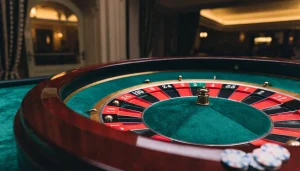
American Roulette at UK Online Casinos: Rules and Odds
The double-zero wheel changes the table layout and the odds behind familiar roulette bets. The...

Online European Roulette in UK Casinos: Rules and Odds
A practical guide to European roulette, from its single-zero wheel and payouts to live play,...

Online Casino Games for Real Cash in the UK
Learn how slot stakes and paylines shape outcomes, and why payout routes, licence status and...

Online Casino Tournaments UK: Free Entry Explained
Free-entry events remove the buy-in, while shared rules and comparable results keep the competition intact....

Online Casinos Without ID in the UK: What It Means
A UK licence requires identity and age checks, even when a casino does not request...

Penny Slots in the UK: Stakes, Free Play and RTP
A game’s penny label does not set its stake; this guide explains cash play, practice...

Plinko Casino UK: Games, Rules and Real-Money Play
Plinko labels can cover different casino formats, while a site's availability alone does not prove...

Progressive Slots Online in the UK: How They Work
Network pooling, jackpot triggers, RTP and bonus terms all affect how progressive slots work and...

UK Slot Casino Sites: Licensing, Costs and Play
Licensing, game providers, payout terms and account safeguards offer a clearer basis for assessing UK...

Live Roulette UK: How the Dealer Game Works
Live roulette shows a dealer spinning a physical wheel, while bets are placed through an...