
Live Baccarat Online Casino UK: Rules and Tables
 Available in GB

Baccarat compares Player and Banker hands against nine, with dealing rules shaping how each round unfolds at a live online table.
How Live Baccarat Works at the Table
Baccarat turns a simple comparison into a small ceremony. Two hands are set against one another: Player and Banker. The names can suggest a contest between people, but at the table they identify the hands on which bets are placed. The question is which hand will finish closer to nine. A Tie bet covers the possibility that they finish level.
That is the basic shape of the game, whether baccarat is played in a casino or encountered through a live table online. The labels are not instructions to choose a side because it sounds more appealing. They mark the outcomes being compared. A Player bet backs the Player hand to finish closer to nine; a Banker bet backs the Banker hand. A Tie bet backs neither to be closer, but expects the two totals to match.
The distinction matters because the hands are not built by players making independent choices about every card. The dealing follows the game’s rules. Two cards go to the Player hand and two to the Banker hand. Their values are combined to establish each hand’s total, and those totals determine whether either hand needs another card. A third card may be drawn under rules that take the totals into account. It is not simply an extra choice made whenever the table feels quiet.
The sequence gives baccarat its measured rhythm. First come the initial cards, then the totals are considered, and the rules settle whether the dealing continues. The Player and Banker hands are assessed within the same framework, though the decision to draw is governed by the specific rules of the game rather than by a player’s hunch. For someone watching, the important point is that a third card is conditional: it may appear, but it is not guaranteed.
Counting is where the game’s compact arithmetic becomes distinctive. If a hand’s total goes above nine, the whole number is not carried forward as an ordinary two-digit score. Only its second digit counts. The total is therefore reduced to the value represented by that final digit, and the comparison is made using the resulting hand totals. Nine remains the target; a larger-looking sum does not automatically make a hand stronger.
Live Blackjack Online in UK Casinos: What to Know
This rule can make the cards seem to contradict their apparent weight. A hand whose card values add to more than nine may count as a low single-digit total instead. The table is not asking which hand has accumulated the largest raw sum. It is asking which one lands nearest to nine after baccarat’s counting rule has been applied. That difference is the hinge on which the bets turn.
Once both hands have been dealt and any permitted third card has been added, their final totals can be compared. The closer hand is the outcome for the Player or Banker bet; matching totals produce the Tie outcome. The process is less about predicting a dramatic reversal than understanding what the rules will count. A card’s contribution only makes sense in relation to the hand total and the way baccarat reduces totals above nine.
That is the useful outline of a live baccarat round: choose which result to back, watch two hands receive their cards, allow the drawing rules to determine whether play continues, then compare the counted totals. The labels may sound social, and the dealing may borrow the gravity of a formal table, but the central task is arithmetic with a narrow destination. Closest to nine.
Progressive Jackpot Slots: How the Prizes Grow
Baccarat Sites and the UK Licensing Question
A baccarat table can appear on a screen without the operator behind it being entitled to serve the British market. The distinction is easy to miss: the live feed is the visible part of the service, while the licence governs the company offering real-money gambling to customers. For a baccarat casino to operate legally for players in Great Britain, its operator must hold the relevant licence from the UK Gambling Commission.
That requirement is not avoided by placing the company or its studio abroad. Remote gambling operators selling into the British market need a UK Gambling Commission licence regardless of where they are based. The Gambling Act 2005 provides the main statutory framework for England, Wales and Scotland; Northern Ireland has a different legal framework. The practical point for British customers is that a polished broadcast, a familiar game or an elaborate website does not substitute for the required operating licence.
Attention: A polished broadcast or elaborate website does not substitute for a required UK Gambling Commission operating licence.
The licence belongs to the operator, not to the dealer seen on screen. A studio may supply the broadcast and the human dealer, while a casino platform presents the table, accepts the player’s selections and communicates those choices to the game. These functions can be separated behind the scenes, but the customer encounters them as one service. The legal responsibility for offering gambling remains with the licensed operator.
A live baccarat game is not simply a recording dressed up as a table. It streams gameplay in real time from a studio where a human dealer conducts the game. The player uses an on-screen interface to place bets as the broadcast unfolds. The camera carries the physical table into the home; the interface carries the player’s decisions back to the game. One side is theatre, the other administration.
That arrangement explains why “live” describes the way the game is delivered, not a different legal category of casino. The relevant question is still whether the operator is licensed to serve the market. A dealer’s presence may make the experience feel closer to a conventional casino, but it does not make an unlicensed service legitimate. Nor does a studio’s location determine whether the operator may accept British customers.
Progressive Slots Online in the UK: How They Work
The UK Gambling Commission’s role is therefore more than a badge beside a site name. Its licensing system establishes which operators are authorised to provide remote gambling to consumers in Great Britain. A site presenting baccarat for real-money play needs to sit within that framework. A claim that a company is regulated somewhere else is not the same as holding the British licence required for this market.
This matters because the public-facing details can be persuasive: a fluent dealer, clear picture and neatly designed betting panel can all make a service appear established. Yet presentation and authorisation answer different questions. The first concerns how a table reaches the screen; the second concerns whether the operator may legally offer the game to British customers. Both belong in any account of online baccarat, but only one is settled by the broadcast itself.
So the phrase “baccarat casino site” covers two layers: a digital service through which bets are placed, and an operator whose legal status determines whether that service may be offered in Great Britain. The live table supplies the human presence; the licence supplies the market’s threshold. A camera can show the cards. It cannot certify the company behind it.
What “Best” Means When No Table Is the Same
When choosing a UK casino for live baccarat, payout timing is one practical detail to consider alongside whether the games you want are available. This list highlights the payout speed provided for each operator.
1. Britsino
Payout speed: 1-3 business days Britsino lists a payout speed of 1–3 business days, giving readers a stated timeframe to consider.
2. x3bet
Payout speed: 1-3 business days x3bet lists payouts as taking 1–3 business days. This is the available detail to weigh when considering it for live baccarat.
3. Amunbet
Payout speed: 1-3 business days Amunbet’s stated payout speed is 1–3 business days, a useful practical point for readers assessing their options.
4. BeOnBet
Payout speed: 1-3 business days BeOnBet provides a payout speed of 1–3 business days. No other operator details are available here.
5. SlotoSport
Payout speed: 1-3 business days SlotoSport lists a payout timeframe of 1–3 business days, which readers can factor into their choice.
6. Chanze
Payout speed: 1-3 business days Chanze states that payouts take 1–3 business days. That is the known detail relevant to this reference card.
7. Dieselwin
Payout speed: 1-3 business days Dieselwin’s listed payout speed is 1–3 business days, offering a clear timing detail for consideration.
8. Revery Play
Payout speed: 1-3 business days Revery Play lists payouts at 1–3 business days. Further details are not provided.
9. NightWin
Payout speed: 1-3 business days NightWin gives a payout speed of 1–3 business days, a practical point to keep in mind when considering the operator.
10. WinBeast
Payout speed: 1-3 business days WinBeast lists its payout speed as 1–3 business days. This is the only specific operator detail available.
There is no single baccarat table that suits every player. A useful comparison begins with the conditions of play, not a medal or a superlative: how quickly a table moves, what its entry stake is, and whether the connection can sustain a live stream. Those details shape the experience more directly than a broad claim that a casino is the best.
Live baccarat moves more slowly than a digital version. Cards are dealt by a human dealer in a streamed game, and the action follows the table’s pace rather than an instant sequence of software prompts. That can be part of the appeal, but it also means that a session takes on a different rhythm. Anyone comparing tables should consider whether that measured tempo feels engaging or simply less immediate. Faster is not automatically better; it is merely faster.
The minimum stake matters just as plainly. Live games generally ask for higher minimum bets than digital versions, so the lowest permitted wager can determine whether a table is suitable at all. That is a practical threshold, not a measure of quality: a higher minimum does not make the dealing more skilful or the game more favourable. It only changes who can comfortably take a seat.
Table limits can differ between offerings and may change; the displayed minimum at the table is the most useful detail for a player.
A specialist review has reported baccarat tables starting at around 20p, but that is a snapshot from one source, not a dependable market-wide standard. Table limits can differ between offerings and may change, so a figure found in an old comparison should not be treated as a promise. The displayed minimum at the table is the useful detail. For someone weighing up the best baccarat casino in the UK, the relevant question is whether that minimum fits the intended session, not whether it looks low beside an isolated example.
Connection quality is another dividing line. A live table needs a stable internet connection; an interrupted stream can make a game difficult to follow and can break the sense of continuity that distinguishes live play. This is less glamorous than a lavish studio description, but more consequential. A table that cannot be watched reliably is not improved by its presentation.
Comparisons are clearest when the same practical questions are applied to each option. Is the pace comfortable? Is the minimum stake acceptable? Can the stream be followed without interruptions? These are modest tests, but they are more revealing than a badge declaring one offering superior to another. They also keep separate questions separate: the licence concerns whether an operator may serve the market, while the table conditions concern what playing there is like.
The word “best” can suggest a universal winner, as though all players arrive with the same budget, patience and connection. They do not. A table with a higher minimum may suit one player and exclude another; a slower rhythm may feel sociable to some and cumbersome to others. A sensible comparison therefore produces a shortlist of suitable conditions, not a crown.
Keno Casinos in the UK: Games, Odds and Play
There is also a small social history in the way casino games are packaged. The physical table once fixed the pace and the price of taking part; the online version makes those terms visible on a screen, but does not erase them. Live baccarat still asks for time, a workable connection and acceptance of the posted minimum. The interface may be digital. The threshold remains real.
No ranking can settle that personal calculation on someone else’s behalf. The more useful standard is whether a particular table’s pace, minimum stake and connection demands match the kind of session being considered. That is less dramatic than naming a winner. It is also more honest.
Playing Baccarat for Real Money
A real-money baccarat table changes the meaning of a decision without changing its appearance. The interface still presents the familiar places to stake, but each selection now represents money that can be lost as well as won. That distinction is easy to blur when the action is reduced to a tap and a changing balance. It is not a change in the game; it is a change in what the game costs.
The Banker bet has a commission attached to a winning outcome. In standard baccarat, the casino typically takes a 5% commission on that win. The deduction is part of the payout calculation, not a separate wager placed after the hand. A displayed return may therefore be adjusted to account for it, or the commission may appear in the balance after the result. The table’s rules and paytable should make clear how that particular game handles the charge.
Real Money Risk Each wager is exposed to the terms of the table, and a winning Banker bet typically incurs a 5% house commission.
The commission reflects an old distinction in baccarat’s accounting: the Banker side has a small statistical advantage, and the house offsets it by retaining a portion of a winning Banker return. It is a modest-looking fraction, but repeated play gives small deductions a long life. The house does not need a dramatic gesture. It has arithmetic.
For a player, the practical question is not whether the commission sounds large in isolation. It is how the stake, the possible return and the deduction fit together before the bet is made. A winning result does not necessarily mean that the full apparent amount is credited. Nor does a run of favourable outcomes remove the commission from the rules. Each wager remains exposed to the terms of the table.
Real-money play also gives a balance a more persuasive voice than it deserves. A displayed increase can feel like permission to stake more; a decrease can invite an attempt to recover what has gone. Neither feeling changes the terms of the next bet. The money at the table is not a score that can be reclaimed by insistence, and a larger stake does not turn uncertainty into control.
A measured approach begins before the first wager, with a sum that can be lost without being needed elsewhere. Once that amount is gone, treating the next deposit as a continuation of the same session can conceal a new decision beneath the old one. Wins deserve a boundary too: extending play simply because the balance is ahead can turn a favourable result into a reason to remain exposed. Restraint is not a system for improving the odds. It is a way of limiting what the session is allowed to take.
French Roulette Online Casinos in the UK: Rules
In the UK, gambling content should be understood as entertainment, not financial guidance. Baccarat is not a means of earning income, and the commission does not make a stake safer. The money mechanics are plain enough; their consequences are less theatrical. A balance can fall quietly.
For real-money baccarat online, the useful details are therefore concrete: the value of the stake, the stated payout, and how a winning Banker bet is adjusted. Reading those terms before play is less exciting than the live table itself. That is precisely the point.
The Live Table, Its Pace and Its Limits
A live baccarat table changes the texture of an online session. The game is no longer presented solely as a sequence generated on a screen: a human dealer appears in real time, and the table’s activity unfolds as it happens. That presence gives the format some of the atmosphere of a casino floor, even when the play takes place at home. The room is different; the ritual is recognisable.
The attraction is partly social, though not necessarily sociable. A dealer’s presence creates a shared point of attention, while the on-screen table gives each player a place within the same event. The exchange may be limited, but it is not abstract. There is a person at the other end of the stream, carrying out the familiar work of a casino table rather than a digital animation standing in for it.
The Live Experience
Live baccarat provides the atmosphere of a casino floor through a real-time stream, allowing players to observe the dealer’s movements and the presence of other players via the interface.
That distinction can make the experience feel more involving. Attention settles on the table and its unfolding rather than on a succession of instant results. The visual rhythm has room to register: the dealer’s movements, the pause before the next stage, the other players’ presence in the interface. None of this changes the underlying game. It changes the way the game occupies time.
And time is the point.
Live games move more slowly than digital versions. The delay is part of the format, not a malfunction to be hurried away. A live table must accommodate a streamed event and the actions taken through its interface; the result is a pace with more pauses than an automated game. For some, that measured rhythm is precisely the appeal. For others, it can feel like waiting around a table whose tempo is set elsewhere.
The difference also has practical consequences. Live games have higher minimum bets than digital versions, so the atmosphere comes with a threshold of entry that may not suit every budget. A stable internet connection is needed to follow the table as it happens; interruptions can break the continuity that gives live play its character. These are not decorative details. They shape whether the format feels absorbing or merely cumbersome.
The casino atmosphere should not be confused with a guarantee of greater control, skill or favourable outcomes. A human dealer makes the experience more tangible, not more predictable. The appeal lies in seeing play unfold in real time and in the small theatre of a shared table, rather than in any promise about what the next result will bring.
There is a quiet contrast between the intimacy suggested by a close-up table and the distance of a screen. The format borrows the gestures and setting of a physical casino, but the participant remains separated from the room itself. That distance is not necessarily a flaw. It is simply the nature of the online arrangement: presence without arrival.
Live Dream Catcher Casino UK: How the Format Works
For baccarat, this makes live play a choice of atmosphere as much as interface. Its measured tempo, human presence and real-time interaction distinguish it from a digital version, while its minimum stakes and connection demands set clear boundaries around the experience. This material is for entertainment purposes only, not gambling advice.
Baccarat Games and the Rules Behind Them
Baccarat is organised around a comparison, not a contest in which a player builds a hand against a dealer. The question is which of two hands—the Player hand or the Banker hand—will finish closer to nine. A wager can be placed on either side, or on a Tie. Those labels describe the outcomes available for betting; the central task is to judge which result the deal will produce.
The aim sounds simple because the scoring system is deliberately spare. Each hand has a total, and closeness to nine is what matters. A total above nine is not treated as a higher score in the ordinary sense: only its second digit counts. That small adjustment changes how the numbers are read. A hand can contain a total that looks larger on paper and still be assessed by the digit at the end.
The rule gives baccarat its particular rhythm of expectation. A player is not choosing how to improve a hand, but placing a prediction on the comparison between the two sides. The deal supplies the hands; the bet identifies which result is being backed. A Tie wager covers the possibility that neither side finishes ahead under the game’s scoring. It is a separate outcome, not a way to combine the Player and Banker bets.
Baccarat Round
Selection
Choose which result to back: the Player hand, the Banker hand, or a Tie.
Dealing
Two cards are dealt to each hand, and a third card may be drawn based on specific game rules.
Comparison
Totals are reduced to their second digit; the hand closest to nine wins.
This is the basic shape of the casino game Baccarat, whether encountered at a physical table or in an online version: select an outcome, then let the hand totals settle the comparison. The simplicity is visible, though it does not make every decision equivalent. The three choices refer to different possible results, and the table’s rules and paytable determine how those wagers are treated. The labels alone do not tell the whole financial story.
For someone approaching baccarat as a new game, the useful distinction is between the names of the betting options and the arithmetic that decides them. “Player” does not mean that the person placing the wager controls that hand; “Banker” is the other side of the comparison. The bettor is choosing a forecast, not directing the deal. That separation can be easy to miss when the table presents the choices as buttons beside the cards.
The Tie option also explains why baccarat is not simply a choice between two opposing hands. A draw is recognised as its own possible result, so the wager menu reflects the shape of the comparison rather than forcing every deal into a Player-or-Banker decision. The winning side is whichever hand is closer to nine, while a tie remains available as a distinct prediction.
Baccarat’s rules ask for little intervention from the person betting. They ask instead for a clear reading of the outcome categories and the way totals are counted. Once a total passes nine, the leading digit falls away; the final digit is the one that matters. A compact rule. A whole table built around it.
Live Roulette UK: How the Dealer Game Works
Lightning Baccarat: What Can Be Said Reliably
The word “Lightning” can make a familiar card game sound as though it has acquired a new physical law. The name alone, however, does not explain how a particular table works. What remains clear is the broad character of live baccarat: play unfolds in real time, with interaction that can give an online table something of the presence of a casino floor.
That distinction matters. A live baccarat table is not simply a still image of a game, and its human presence is part of the experience. But the atmosphere of a live stream does not, by itself, establish what rules or additional features apply to a version carrying a particular name. Those details belong to the table’s own rules and paytable, not to an inference drawn from its label.
Baccarat’s familiar structure provides a reference point, rather than a licence to assume every variation is identical. At its heart, the game concerns the contest between Player and Banker hands, with a Tie bet also available. Beyond that shared framework, a table’s stated conditions are what determine how its particular play is presented. The name is not the rulebook.
Nor do past results turn a table into a puzzle with a readable answer. A sequence of earlier outcomes records what has happened; it does not make later outcomes predictable. Statistics trackers can organise that history, but they cannot alter the next result. Pattern-seeking is an old human habit, especially where chance is dressed in ceremony. The table remains indifferent.
For anyone comparing a live baccarat casino site with another, the useful distinction is between the general live experience and the specific terms attached to a named game. Real-time interaction and the sense of a shared casino table are features of live baccarat as a format. Claims about Lightning-specific mechanics need to be judged against the rules displayed for that table, rather than filled in from the title.
Statistics trackers record past outcomes but cannot make future results predictable, as the table remains indifferent to previous patterns.
That is a modest boundary, but an important one. A name can suggest speed, drama or novelty; only the stated table rules can say what actually happens. In gambling, suggestion is cheap. Rules are the substance.
Dealers, Mobile Play and the Online Table
A live-dealer baccarat table is built around a simple division of labour: the studio supplies the scene, while the player’s screen supplies the controls. A human dealer handles the game in real time on camera; bets are entered through an on-screen interface. It is neither a recording nor a purely digital animation. The broadcast and the betting panel meet at the same virtual table.
That arrangement changes how an online baccarat session feels. The dealer’s actions unfold in sequence, and the interface has to keep pace with them. A digital version can move from one round to the next without waiting for a person to handle the table. Live play cannot. The slower rhythm is part of the format, not a fault that faster clicking can correct.
Fruit Machine Slots in the UK: From Pubs to Online
On a mobile screen, the interface has to share limited space with the stream. The dealer remains the visible centre of the table, while betting controls sit alongside or around the video. That can make the experience feel more intimate than a desktop view, but it also puts greater weight on a steady connection: a stream that stalls or loses clarity can make the timing of a live round harder to follow. A stable internet connection is essential to the format.
There is a financial consequence to the human pace, too. Live games tend to move more slowly than digital versions and carry higher minimum bets. The difference is structural: a studio table takes time to run, and its limits are not necessarily those of a quick, automated game. A live dealer Baccarat casino therefore offers a particular kind of access to the game, not simply a filmed version of an identical digital session.
Jackpot Mobile Casinos in the UK: A Practical Guide
The interface is a small piece of theatre. The dealer is present, but at a distance; the controls are immediate, while the action they govern is not. Mobile play compresses that distance into a handheld screen, without removing the pauses or the dependence on the network. The table is online. The pace is still human.
Baccarat Bonuses and the Small Print
A baccarat casino bonus can look generous in its headline and be less useful at the table. The key distinction is between the bonus amount and the wagering requirement attached to it: the latter sets how much qualifying play is required before the offer’s terms are met. Baccarat play may count for less than its full stake towards that requirement, so the contribution rate matters as much as the advertised sum.
A specialist review of casino promotions describes live games as sometimes receiving limited weighting, with a 10% contribution given as an example. That figure is not a universal rule. Each offer has its own terms, and baccarat may be excluded altogether or count at a different rate. The promotion’s wording, rather than its banner, determines what applies.
The same kind of specialist review describes many UK welcome offers as free spins for slot games, which cannot be used at live tables. A welcome bonus or deposit bonus therefore does not necessarily help with live baccarat. A no-deposit offer, where one is presented, is also governed by its own conditions; the label alone does not establish which games qualify or what can be withdrawn.
Do
- Read the promotion’s wording
- Check the game weighting
- Verify the expiration date
Don’t
- Rely on the headline amount
- Assume all bonuses apply to live tables
- Ignore maximum bet conditions
The small print can also define a maximum bet while an offer is active, alongside wagering rules and game weighting. Those conditions can change the practical value of a promotion. A bonus that permits baccarat but gives it little credit towards the requirement may take substantially more qualifying play than the headline suggests.
Promotional terms deserve a quiet reading before opting in: wagering requirements, game weighting and maximum bet conditions all matter. An offer should not be treated as extra playing money without checking when it expires or whether the chosen table qualifies. No-deposit wording, deposit matching and free spins are different arrangements, not interchangeable promises. Nor does a payment method such as Bitcoin make an offer suitable for baccarat; eligibility still rests on the promotion’s terms.
Promotions are marketing, not a reduction in the game’s uncertainty. A careful comparison begins with the rules attached to the offer, not the size of its headline. This information is for entertainment purposes only and is not gambling advice.
Playing Within Limits
A live baccarat table can make each decision feel unusually immediate. Cards appear on screen, bets close, and the next hand follows before the room’s attention has quite settled. That rhythm can lend a small stake the weight of a larger one. A budget set before play gives the session a boundary that the atmosphere itself cannot provide.
The budget should be an amount that can be lost without affecting ordinary expenses or obligations. Once that amount is used, the session is over; it is not a starting point for deciding whether to deposit more. The same boundary applies when a run of wins makes continued play feel harmless. A favourable stretch does not turn the next stake into money that cannot be lost.
Online Bingo UK: Tickets, Patterns and Slot Games
Chasing losses is particularly tempting at a live table because the previous hand remains visible in the mind even after it is finished on screen. Raising a stake to recover what has gone is not a way to reverse the earlier result; it exposes more money to the same uncertainty. Chasing winnings carries a quieter version of the same risk: a session can continue simply because leaving now seems to mean giving up a chance to win more. Neither impulse is a measure of what the next hand will do.
The table’s written rules deserve attention before any bet is placed. Baccarat can be presented through different tables or formats, and the terms on screen are more useful than assumptions carried over from another game. The paytable should be read alongside them, including how the available outcomes are settled. This is not a prediction exercise. It is a check on what the wager means and what a winning result pays under that particular table’s conditions.
That check also helps prevent a familiar confusion: the amount at risk is not always the amount returned. In standard baccarat, a winning Banker bet may be subject to a house commission, commonly set at five per cent. The precise settlement should be confirmed in the table information rather than inferred from the label on the betting area. Small print is still part of the game, even when the dealer is already waiting.
Free-play versions can help show the layout and the sequence of a session, but they do not produce real payouts or winnings. The distinction matters: a practice display can familiarise someone with the interface, yet it cannot reproduce the financial consequence of a real-money bet. Treating the two as interchangeable would confuse rehearsal with risk.
A measured approach is less about finding a system than keeping decisions within limits chosen in advance. No sequence of wins makes an unlimited session prudent, and no losing hand creates an obligation to continue. The game is entertainment, not a source of income or financial advice; its appeal lies in the ceremony of the table, not in any promise about what a particular session will return. A limit holds its value only when it remains a limit.
How do you choose a live dealer casino?
Choose an operator that holds a UK Gambling Commission licence to offer gambling in Great Britain.
How does the house edge change between games?
In roulette, the house edge is 2.9% on straight-up bets and 2.7% on other bets. American Roulette also has a second green pocket, 00, unlike European Roulette.
Why does the dealer always win in blackjack?
The dealer does not always win: players win by beating the dealer’s hand without going over 21. Blackjack still has a house edge, but that does not mean every hand goes to the dealer.
BetFoxx games and software providers

BetFoxx live casino guide
BetFoxx offers live casino games, including live roulette, live blackjack and live baccarat formats. Current...

Aviator Casino Game in the UK: How Sites Differ
The guide distinguishes UKGC-licensed casinos from offshore platforms and examines play options, bonus terms, chance...

3-Reel Slots in the UK: Classic Format Explained
The familiar reel layout is a digital format, not a physical fruit machine, and it...

5-Reel Slots in the UK: How They Work
Five-reel slots bring symbols together across a shared field, while demo play, bonus features and...

Bonus Buy Slots UK: Demo Play, Rules and Features
A practical look at demo play, feature controls, slot variance and how bonus-buy options shape...

Fast Payout UK Casinos: What Keno Paytables Tell You
Keno’s paytable sets possible prizes from picks and catches, while casino withdrawal processing is a...

First-Deposit Casino Bonuses in the UK: What to Know
A first deposit links an account payment to a promotion, while eligibility, bonus value and...

High-Volatility Slots in the UK: What to Know
Volatility describes how returns are distributed over play, from frequent smaller wins to less frequent,...

Highest RTP Slots in the UK: How to Assess Claims
RTP can compare expected returns over extensive play, but it cannot predict an individual session...

Keno Casinos in the UK: Games, Odds and Play
Keno uses a shared field of 80 numbers, but game formats, selection sizes and paytables...

Live Casino in the UK: How Online Tables Work
A live casino combines a streamed table with online controls, while payment rules, game formats...

Low-Volatility Slots in the UK: How They Work
Low volatility tends to mean smaller, more frequent wins, but it does not promise a...

Online Slot Payout Percentages and What RTP Means
The percentage describes expected returns across repeated play, not a guaranteed share back on any...

Progressive Jackpot Slots: How the Prizes Grow
Progressive prizes grow from qualifying wagers, unlike fixed slot payouts that follow the values set...

RTP Casino Slots UK: How Long-Run Returns Work
RTP describes a slot’s theoretical share of stakes returned as prizes over many plays, not...

Video Slots UK: Reels, Rules and How They Play
Reels, paylines and bonus features determine how slot results are formed and how play moves...

UK Casino Dice Games: How Digital Play Works
Some online dice-style games use random-number processes to determine outcomes, while on-screen animations give those...

Chicken Road Game in UK Casinos: What to Know
A practical guide to the slot label, online play, demo limits, casino rewards and the...

Classic Slots Online in the UK: How They Work
Explore familiar reel layouts, symbols, features and browser play, while keeping in mind that classic...

Crash Casino Games in the UK: Rules and Fairness
The guide distinguishes UK-licensed casinos from offshore platforms and explains how offers, game mechanics, fairness...

Crazy Time Live Casino Game in the UK Explained
A guide to the live studio format, casino interfaces, bonus terms and the limits of...

Deal or No Deal Casino UK: How the Game Works
The article traces the game from its television origins to online play, clarifying what demos,...

Fastest Payout Online Casino UK: What Can Be Proven
A meaningful speed comparison needs a defined event, start and end points, and equivalent terms...

French Roulette Online Casinos in the UK: Rules
French roulette pairs a 37-pocket wheel with rules such as La Partage, while online formats...

Fruit Machine Slots in the UK: From Pubs to Online
The guide traces familiar fruit-machine features into digital play, including reels, symbols, holds, nudges and...

Hi-Lo Casino UK: Rules, Ties and Online Play
Hi-Lo rules vary: ties may lose or have their own wager, while online and live...

Jackpot Mobile Casinos in the UK: A Practical Guide
Jackpot labels can describe different prize structures, while mobile play, promotions and payment terms shape...

JetX Casino Game in the UK: How It Works
A closer look at JetX’s crash-game format, randomness, casino offers, platform protections and the limits...

Live Casino Lightning Roulette in the UK
A physical dealer-spun wheel supplies the result, while the stream and betting interface bring the...

Live Blackjack Online in UK Casinos: What to Know
Live play has a slower rhythm and higher minimum bets, while table options, trust checks...

Live Dream Catcher Casino UK: How the Format Works
A guide to the live-dealer setup, game mechanics and checks that matter before play. The...

Mines Casino Game in the UK: Rules, Risk and Play
The guide separates demo and real-money play, explains casino randomness, and sets out what UK...

Monopoly Live Casino UK: How Live Play Works
A practical look at the studio stream, operator suitability, game mechanics, demo play and the...

Online Bingo UK: Tickets, Patterns and Slot Games
Bingo formats, ticket stakes and slot games are explained alongside the steps from buying a...
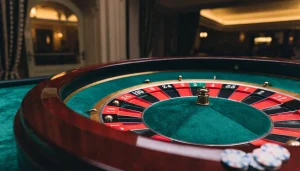
American Roulette at UK Online Casinos: Rules and Odds
The double-zero wheel changes the table layout and the odds behind familiar roulette bets. The...

Online European Roulette in UK Casinos: Rules and Odds
A practical guide to European roulette, from its single-zero wheel and payouts to live play,...

Online Casino Games for Real Cash in the UK
Learn how slot stakes and paylines shape outcomes, and why payout routes, licence status and...

Online Casino Tournaments UK: Free Entry Explained
Free-entry events remove the buy-in, while shared rules and comparable results keep the competition intact....

Online Casinos Without ID in the UK: What It Means
A UK licence requires identity and age checks, even when a casino does not request...

Penny Slots in the UK: Stakes, Free Play and RTP
A game’s penny label does not set its stake; this guide explains cash play, practice...

Plinko Casino UK: Games, Rules and Real-Money Play
Plinko labels can cover different casino formats, while a site's availability alone does not prove...

Progressive Slots Online in the UK: How They Work
Network pooling, jackpot triggers, RTP and bonus terms all affect how progressive slots work and...

UK Slot Casino Sites: Licensing, Costs and Play
Licensing, game providers, payout terms and account safeguards offer a clearer basis for assessing UK...

Live Roulette UK: How the Dealer Game Works
Live roulette shows a dealer spinning a physical wheel, while bets are placed through an...