
Casinos that accept e-cheques in the UK
 Available in GB
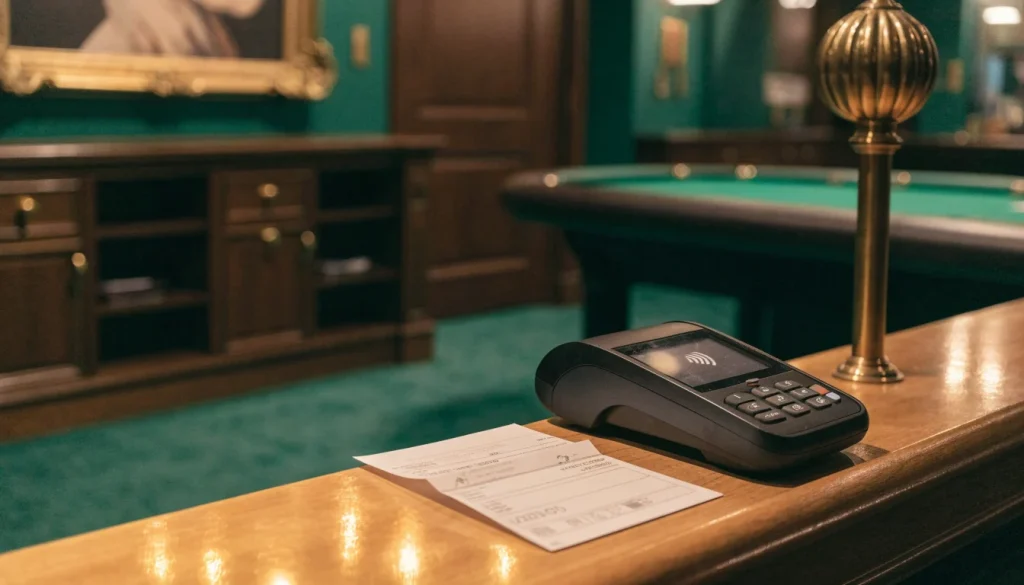
An operator’s payment list may be broader than the options shown for a specific account or transaction.
Why an e-cheque needs a cashier check
An e-cheque can sound like a familiar bridge between a paper cheque and an online payment: money authorised through a bank, without the physical slip passing across a counter. But the name alone does not establish that a UK casino accepts it. A page headed “payments” may give a broad outline of the methods an operator supports, while the cashier is where the options for a particular account and transaction are shown. The distinction is less glamorous than a list of recommended sites. It is also more useful.
That matters because payment descriptions can be broad. A casino may mention bank transfers, cards or electronic payments without identifying e-cheques as a separate option. It would be a mistake to treat those neighbouring categories as interchangeable. A bank transfer is not automatically an e-cheque, and a card logo does not confirm that every product issued under that brand can be used. A general payment list is a map of sorts, but not a guarantee that every route is open.
Use this list as a starting point when researching casinos for the UK market in 2026. Check each casino’s current cashier information to confirm whether it supports e-cheques and review its payout terms.
1. Britsino
Payout speed: 1-3 business days Britsino lists a payout speed of 1–3 business days. Check its current cashier information for details about e-cheque availability.
2. x3bet
Payout speed: 1-3 business days x3bet lists a payout speed of 1–3 business days. Its e-cheque availability should be confirmed with the casino.
3. Amunbet
Payout speed: 1-3 business days Amunbet lists a payout speed of 1–3 business days. Consult its current cashier information to see whether e-cheques are supported.
4. BeOnBet
Payout speed: 1-3 business days BeOnBet lists a payout speed of 1–3 business days. Check directly with the casino for current e-cheque payment options.
5. SlotoSport
Payout speed: 1-3 business days SlotoSport lists a payout speed of 1–3 business days. Confirm its current payment methods before relying on e-cheque availability.
6. Chanze
Payout speed: 1-3 business days Chanze lists a payout speed of 1–3 business days. Its current cashier information is the place to verify e-cheque support.
7. Dieselwin
Payout speed: 1-3 business days Dieselwin lists a payout speed of 1–3 business days. Check with the casino to establish whether e-cheques are currently available.
8. Revery Play
Payout speed: 1-3 business days Revery Play lists a payout speed of 1–3 business days. Review its current payment information for confirmation of e-cheque support.
9. NightWin
Payout speed: 1-3 business days NightWin lists a payout speed of 1–3 business days. Confirm its available payment methods directly, including whether e-cheques are supported.
10. WinBeast
Payout speed: 1-3 business days WinBeast lists a payout speed of 1–3 business days. Check its current cashier details to verify e-cheque availability.
The same caution applies to Visa and Mastercard. A specialist review may list both, yet that does not settle whether either is available to a UK customer at the point of deposit, or whether a particular card product is eligible. The cashier is the practical check. A logo elsewhere on a site can signal recognition of a payment brand; it cannot settle the conditions of an individual transaction.
This is why lists of “e-cheque casinos” deserve a second look. A list can make acceptance seem like a permanent quality of a casino, much like the games it offers. Payment arrangements are less fixed. The options displayed can depend on the casino’s current setup and the account being used. If e-cheque does not appear in the cashier, calling the site an e-cheque casino on the strength of a general banking reference would stretch the label beyond what it proves.
The distinction is especially important on a mobile site. A casino may present its cashier through a smaller screen or a compact menu, but the screen size does not change what counts as confirmation. A payment method needs to be identifiable in the deposit flow, not inferred from a marketing page, a logo strip or a category called “banking”. Convenience of presentation is not proof of availability.
There is a small cultural story in this insistence on the cashier. Online gambling has inherited the language of older financial routines—cheques, accounts, transfers—while moving the actual decision into a screen that updates as an operator’s services change. The old cheque carried a visible promise and a paper trail. Its digital namesake can carry an aura of familiarity without explaining exactly how a casino handles it. The cashier, for all its plainness, is where the label has to become an actual choice.
Casinos That Accept Entropay in the UK: Payment Checks
For someone looking for an e-cheque online casino in the UK, then, the useful question is not whether a site’s general page sounds compatible with cheque-like payments. It is whether the method appears, under a clear name, in that casino’s cashier for the intended deposit. If the wording is unclear, the operator’s own payment information can clarify the label before money is moved. That is a narrower test than a “best” or “top” ranking, but it avoids treating a broad description as a confirmed service.
The same standard holds for an e-cheque casino site visited on a phone or computer. A method may be mentioned in a general list yet not be offered in the cashier; conversely, a cashier may show the available choices more precisely than a promotional page. Neither appearance should be converted into a claim about every account or every route. The point is simply to distinguish a named possibility from an option that can actually be selected.
A careful check also keeps the question in proportion. Finding an e-cheque option would establish that it is presented for that transaction; it would not, by itself, answer every further question about how the casino handles payments. Those are separate matters. First comes the modest confirmation that the method is there at all.
No borrowed certainty.
Acceptance is not the same as a complete payment route
A payment method can appear in a casino cashier as a way to add funds without being available for a withdrawal. The two directions of travel are separate parts of the transaction, even when a screen presents them under the same heading. For anyone considering an e-cheque, that distinction matters: a successful deposit would establish that the casino accepted that particular payment, not that the same route could return a balance later.
The difference is easy to miss because the deposit is the visible beginning of play. A method is selected, the amount is entered, and the account is credited. Withdrawal arrangements tend to appear only when funds are being requested. By then, the relevant rules may look less like a convenience feature and more like a condition of the account.
Casinos That Accept eCheck in the UK
For online casinos accepting e-cheques in the UK, the key question is therefore not only whether an e-cheque can fund an account. It is also whether the operator can return money to that source, and what happens if it cannot. A payment logo or a deposit option cannot answer both questions by itself.
The original source has a regulatory role
UK anti-money laundering controls commonly require a payout to go back to the original payment source. This is part of a wider effort to keep the movement of funds traceable and to reduce the possibility that gambling accounts are used to move money between unrelated parties. It is not simply an operator’s preference for one button over another.
The same principle has an anti-fraud purpose. Returning funds through the route that supplied them helps connect the withdrawal to the transaction that began the account activity. Where a different destination is proposed, the casino may need further checks before it can approve that route. An alternative is not automatically impossible, but it may bring additional verification.
This means that “accepted” is a narrow word. It may describe the casino’s willingness to receive a payment, while leaving open how the balance can be paid out. A complete payment route is one in which the deposit and the return of funds can both be handled under the operator’s rules. The cashier’s presentation, not a general description of a payment method, is where those functions need to be distinguished.
There is a small institutional irony here. Digital payments are often presented as frictionless, but the return journey is deliberately not frictionless when ownership or source is unclear. The safeguard is part of the design.
What a deposit option does not establish
A casino listing an e-cheque option for deposits does not, on its own, establish that withdrawals can be sent back by e-cheque. Nor does it show that another route will be accepted without checks. The terms may depend on the operator’s own payment arrangements and the account’s circumstances; the label on the deposit screen is not a promise about every later transaction.
A payment method available for deposits does not guarantee that withdrawals can be sent back via the same route.
The same caution applies to other payment methods. Their presence in a cashier should not be treated as proof that they can receive payouts. Some methods are explicitly deposit-only, while other routes may be subject to closed-loop rules or further review. A method can work perfectly well at the point of funding and still fail to provide the return path a customer expected.
That distinction is especially relevant when a payment name is unfamiliar or when the casino describes a method in broad terms. The practical question is whether the cashier and the applicable payment terms identify it as a deposit route, a withdrawal route, or both. If the information is unclear, the uncertainty belongs to the transaction, not to the spelling of the method.
A casino’s general statement that it accepts a payment type is therefore incomplete for anyone assessing how funds may come back. “Deposit accepted” and “withdrawal supported” are different claims. One does not silently include the other.
Casinos That Accept Interac in the UK: What to Check
The route can affect the withdrawal request
If a withdrawal is requested to a different destination from the one used to deposit, the operator may need to establish why the original source is not being used and whether the new route belongs to the account holder. That can mean additional verification. The point is not that every change will be refused; it is that a different destination can create a check that would not arise in the same way when funds are returned to their source.
This is why an e-cheque should not be judged solely by whether it appears as a way into an account. Before treating it as a complete payment route, the withdrawal side needs to be understood as well. The casino’s stated rules should make clear how the original source is handled and what applies if a return through that source is not available.
There is no contradiction in a casino accepting an e-cheque deposit while limiting or reviewing the payout route. The deposit confirms receipt. The withdrawal process must also satisfy the controls around tracing funds and confirming their destination. Those are related stages, but they are not interchangeable.
A payment method can open the door. It does not, by itself, describe the way back.
Casinos that accept bank cheques in the UK: what to know
Deposits, payouts and the time between them
A deposit and a withdrawal are not opposite movements performed at the same speed. Money entering a casino account may be credited as soon as the payment is authorised; money leaving it has another stage to pass through. That difference matters when an e-cheque is being considered: even if a cashier displays the method for deposits, the time taken to fund an account says little about how quickly a later payout will be completed.
A specialist review describes the contrast plainly for card payments: a deposit can be instant, while a payout may take several business days. That is a reported example, not a timetable that applies to every casino or every card transaction. The useful point is the distinction between the two clocks. A deposit’s apparent speed can reflect the moment funds are credited. A withdrawal’s total processing time also includes the casino’s own approval.
Casinos that accept Neosurf in the UK
The payment screen tends to make the first clock more visible. Once a deposit is accepted, the balance may update and play can begin. A withdrawal is less immediate because it is a request for money to leave the account. Before that happens, the casino must process the request. The displayed status may therefore remain pending even when the player has already submitted everything required. “Requested” is not the same as “sent”.
That approval stage is not merely a technical pause. Remote gambling involves money moving through an account whose ownership and activity have to be checked. The casino’s internal process sits between the withdrawal request and the onward payment. A quick deposit does not remove that checkpoint, and it should not be read as evidence that the casino will approve a payout at the same pace.
The distinction is particularly easy to miss when the payment method itself sounds like a cheque. An e-cheque deposit, if offered by a casino, may appear to belong to the familiar world of electronic transfers. But the name of a payment method does not determine the length of the casino’s review, nor does it establish how long a withdrawal will take. The cashier’s deposit process and the casino’s payout process are separate parts of the transaction.
Casinos That Accept Ethereum in the UK: Payment Guide
First withdrawals can take longer while verification is completed. A specialist review identifies this as one reason the first payout may not follow the same pattern as later requests. KYC can involve checks on the account and documents, and a request may remain under review while those checks are carried out. The delay is therefore not necessarily a sign that the payment has failed. It may mean that approval has not yet been completed.
There is a difference between a delay at the casino and a delay after the casino has acted. A pending request points to a step that may still be in the operator’s hands; a processed withdrawal indicates that the casino has approved it and initiated the payment. These labels are not perfectly uniform between sites, so their exact meaning depends on the cashier’s wording. Still, separating approval from onward delivery helps make sense of a payout that seems to be taking longer than the original deposit.
Casinos that accept Revolut in the UK: card checks
The order of events matters. A player may deposit, use the account, request a withdrawal and then encounter a verification check that was not required at the point of deposit. That sequence can feel inconsistent, but the two transactions do not necessarily trigger identical checks. The casino may have enough information to accept a deposit while still needing to complete its review before authorising a payout. Speed at entry is not a promise about speed at exit.
For someone searching for e-cheque casino sites in the UK, the practical question is therefore not simply whether an e-cheque can put money into an account quickly. The relevant timing picture includes the deposit, any waiting state attached to the withdrawal request, the casino’s approval, and the point at which the payout is released. Each stage answers a different question. A fast balance update answers only the first.
The clearest expectation is a modest one: treat deposit speed and withdrawal speed as separate measures. A payment can arrive in the account promptly while a later payout takes longer because it must pass through approval and, for a first withdrawal, potentially KYC. No single deposit experience settles the timing of the whole route. The cashier’s stated process and the withdrawal status are more informative than the speed of the initial payment.
Fast in. Slower out.
Casinos That Accept Tether in the UK: Payment Guide
Comparing payment routes without a promised ranking
A payment method can look inexpensive because its most visible charge is small, or absent. That is not the same as having the lowest overall cost. Casino charges are only one part of the calculation: a payment provider, card issuer or bank may also levy a fee, while a currency conversion can add a less obvious cost. With some routes, network fees may enter the picture too. The useful comparison is therefore not a league table of methods, but an estimate of what the same transaction would cost from start to finish.
This matters when considering an e-cheque. A casino name attached to a payment method does not establish that the method is available for a particular account, nor does it establish what the transaction would cost. An advertised list can be a poor guide to the price actually shown in a cashier. Fees and conversion terms belong to the route and transaction, not to a vague reputation for being cheap.
Casinos That Accept iDEAL in the UK: Payment Checks
A specialist payment review has noted that a currency-conversion spread can cost more than a visible flat fee. The spread is the difference between the exchange rate applied to a transaction and a reference rate; it may be folded into the rate rather than displayed as a separate charge. That makes it easy to compare two obvious fees and miss the larger subtraction. The quiet charge is still a charge.
A fair comparison begins with the amount intended for the transaction and the currency in which the casino account is held. Then the visible casino fee can be considered alongside any charge listed by the provider, bank or card issuer. If conversion is involved, the applied rate matters as much as a stated fee. For a cryptocurrency route, a network cost may also be relevant. These are not interchangeable categories: one may be fixed, another may vary with the amount or exchange rate, and some may not apply at all.
The comparison should use the same transaction amount and currency assumptions for every route. Otherwise, one method may appear cheaper simply because it is being assessed under different conditions. A flat charge can weigh heavily on a smaller transaction; a percentage-based cost can become more significant as the amount changes. No universal lowest-fee method follows from the names of payment options alone. The actual amount is the test.
Cost Comparison
Identify Casino Fees
Note any direct charges shown for the transaction in the casino cashier.
Check Provider Costs
Verify if the payment provider, bank, or card issuer adds a separate fee.
Assess Currency Conversion
Confirm if the transaction involves currency conversion and how the rate is applied.
Include Network Fees
Account for any network costs if a cryptocurrency route is used.
Calculate Total
Compare the final total for the same amount across different methods.
There is also a difference between a fee charged by the casino and one charged elsewhere in the payment chain. A cashier may state that it imposes no charge, while the provider or bank still applies one. Conversely, a rate that looks favourable at the casino can be altered by a conversion spread outside the cashier. A comparison that stops at the deposit screen may therefore leave part of the cost uncounted.
For an e-cheque route, the relevant figures would be the charges and conversion terms attached to that specific transaction, if the cashier offers it. Without those details, placing it above a card, bank transfer or other route as the “best” option would be guesswork. Nor does a list of casinos establish a price ranking: each operator’s terms and each payment provider’s charges can differ. A neat ranking would make the uncertainty look settled. It is not.
A practical cost comparison can be kept simple:
- Note any casino charge shown for the transaction.
- Check whether the payment provider, issuer or bank adds a separate fee.
- Confirm whether the transaction involves currency conversion and how its rate is applied.
- Include network costs where the selected route uses them.
- Compare the total for the same amount, rather than comparing one visible fee in isolation.
The point is not to assume that every route carries every charge. It is to identify which costs apply before treating one method as cheaper. Payment prices are assembled from several hands, and the cashier may show only some of them. For e-cheques as for other routes, a low headline fee is not a reliable verdict; the transaction’s full cost is.
An e-cheque deposit is not a verified e-cheque casino
A payment page can look reassuringly familiar without answering the question that matters. A casino may display debit cards, bank transfers or digital wallets, yet that does not establish that it accepts e-cheques. The label “bank payment” is not a promise that every way of moving money through a bank is supported.
That distinction matters because payment lists often compress different services into broad categories. A bank transfer and an e-cheque may both involve a bank account, but they are not interchangeable names for the same transaction. Likewise, seeing Visa or Mastercard listed says something about card payments, not about e-cheques. Debit cards, including Visa and Mastercard, are commonly accepted at UK casinos; that familiar pattern cannot be used to infer support for a less clearly defined route.
The phrase “e-cheque casino” can suggest that acceptance is a fixed property of a brand. In practice, a payment method can depend on the cashier presented to a particular account and on the transaction being attempted. A general page listing popular methods may describe the operator’s broader offering, not every option available to every customer. A deposit screen is more concrete, but even its appearance should be read as confirmation only of the function it explicitly offers.
There is a small history of naming hidden in such menus. Payment systems change their labels, combine services or retire older options, while casino pages can lag behind. A method that sounds like an electronic version of a cheque may therefore be absent, unavailable, or described under a provider’s own name. Guesswork does not make the label clearer.
Casinos That Accept MuchBetter in the UK
The useful test is narrow: does the casino’s own payment interface identify an e-cheque option for that account, and does it state that the option can be used for the intended transaction? If the wording is ambiguous, customer support can clarify what the named method means before any funds are sent. A generic list of familiar payment brands is not that confirmation.
This is not a judgement on whether e-cheques are inherently suitable or unsuitable. It is a boundary between evidence and assumption. A casino may support several well-known ways to pay and still offer no e-cheque facility at all. The method has to be named, not inferred.
Deposit amounts and account limits
A minimum deposit is a threshold for a particular transaction, not a promise that every payment method will accept the same sum. A specialist review places the starting point for casino deposits at £10–£20, with the exact figure depending on the selected method. That range is a broad guide, not a fixed e-cheque tariff: an e-cheque option, where offered, may have its own minimum displayed in the cashier.
Casinos That Accept Ukash in the UK: What to Know
The amount entered also has to fit the payment route’s rules. A cashier may reject a sum below its minimum, while a bank or payment provider can impose separate transaction conditions. The practical figure is therefore the one shown for the chosen method at the point of deposit, rather than a general minimum copied from a casino’s promotional page. Small print enjoys a long career.
Maximums are less uniform. A casino may set a cap for one transaction and separate limits across a day or month; the applicable ceiling can depend on both the payment method and the account’s status. A verified account may be treated differently from one still awaiting checks, but no single maximum can be assumed across operators or payment routes. For e-cheques in particular, a limit should not be inferred from the limits listed beside cards or bank transfers.
There is another distinction: a deposit cap and a personal financial limit do different jobs. The first is an operational boundary on what a transaction or account can accept. The second is a control chosen for managing gambling spend. Remote gambling licensees must ask new customers to set a financial limit before their first deposit and make account-level controls accessible. That requirement does not establish the minimum or maximum permitted by a payment method; it sits alongside those figures.
Casinos that accept Neteller in the UK: what to check
For a transaction of any size, the relevant amount is the one the cashier accepts for that account and method, with the account’s own controls also in view. A headline minimum can indicate the scale of entry, but it cannot establish a specific e-cheque threshold or reveal every cap. Limits belong to the route and the account, not merely to the casino’s name.
Keeping payment ownership details consistent
Payment details are not merely a way to move money. They also help a remote gambling licensee establish whose funds are entering an account and where they should be returned. When the casino account and payment route belong to the same customer, basic ownership checks are less likely to become an avoidable obstacle.
That principle matters whether the proposed method is an e-cheque or a more familiar option. The label on a payment route does not settle the ownership question: the account holder’s details still need to correspond to the person registered with the casino. A mismatch can leave a transaction needing clarification, even when the payment method itself is accepted.
This is one reason a consistent source is often the cleanest route. A named account used for both deposit and withdrawal leaves a clearer trail than funds arriving from an account in someone else’s name. It supports the casino’s checks against fraud and helps keep the transaction connected to the customer who holds the gambling account. No special advantage is created by calling the route an e-cheque.
The same logic applies to account information. Details that vary between registration and payment can raise questions about who controls the money. A payment belonging to a partner, relative or other third party may seem harmless within a household, but it does not make the ownership relationship clearer to the operator. In a regulated system, clarity is a useful form of housekeeping.
Casinos That Accept Boku in the UK: Payment Guide
There is a wider social bargain behind this routine. Remote gambling is permitted within a framework that asks operators to identify customers and monitor the movement of funds. Those controls can feel bureaucratic at the point of payment, but they are also why a casino account is not simply a shared household wallet. The paperwork has a purpose, even when it is not graceful.
For anyone considering an echeque casino payment in the UK, the practical point is therefore about whose account is being used, not a presumption that the method is available. An e-cheque associated with the same customer’s details fits the ownership principle more neatly than one tied to another person. That does not guarantee acceptance; it reduces one avoidable source of friction.
Consistency is not a shortcut around KYC, nor a promise that a transaction will proceed without questions. It is simply the least complicated starting point: one customer, one clearly attributable payment source, and matching account details. Dull, perhaps. Useful.
Checking payment availability before depositing
Payment logos on a casino’s general banking page are not a reliable substitute for the options shown in its cashier. A method may appear in a broad list yet be unavailable for a particular account or transaction. The cashier is the practical check, not the decorative row of familiar brands.
For an e-cheque, availability should be confirmed before any money is sent. Look for the method among the deposit choices, then check separately whether it is offered for withdrawals. A deposit option alone does not establish that the same route can receive a payout. Closed-loop rules may also affect how funds are returned, so the withdrawal terms matter alongside the buttons on screen.
The same check applies to other payment routes. Visa and Mastercard are commonly accepted as debit cards at UK casinos, but the actual cashier should confirm current availability and card-product eligibility. Credit-card payments for gambling are not permitted at UK-licensed casinos. A specialist review has described open banking and bank transfers as options that can provide instant deposits and fast withdrawals at many sites; that is not a guarantee for every operator or account.
Payment Verification
- Check if the e-cheque method is available in the cashier for the specific account.
- Confirm if the method is available for both deposits and withdrawals.
- Review the operator’s terms for any specific conditions on the method’s use.
- Verify that the account and payment currency align to avoid conversion costs.
Before proceeding, the useful questions are simple: does the cashier offer the method for this account, is it deposit-only or available for withdrawals too, and do the operator’s terms impose conditions on its use? If any answer is unclear, the payment route is not yet established. A short check can prevent the familiar irritation of discovering that a method exists on a page but not where the transaction has to happen.
When withdrawal speed matters more than deposit speed
A deposit can appear almost at once while a withdrawal waits behind a different set of processes. The cashier’s display is only part of the story: after a request is made, the casino must approve it, and an account that is not fully verified can face additional checks. A swift payment rail cannot make those stages disappear.
A specialist review describes PayPal, open banking and debit cards connected to fast payout systems as among the quicker withdrawal routes. That is a comparison, not a timetable. Availability and performance depend on the casino and the account, so the method’s name alone cannot establish when funds will arrive.
The distinction matters because “instant” often describes the movement of money into a gambling account, not back out of it. A card deposit may be completed promptly, yet a payout can take several business days. Bank transfers may also be affected by cut-off times, weekends and currency conversion. Each route has its own final leg.
Then there is the casino’s own queue. A first withdrawal may take longer while KYC is completed, and processing speed depends on both that approval and the account’s verification status. The payment provider only handles its part of the journey. The rest belongs to the operator.
Casinos That Accept USDC in the UK: What’s Confirmed
For a UK player comparing casinos that accept e-cheques, withdrawal speed is therefore a separate question from whether an e-cheque can fund an account. The relevant comparison is between the payout methods actually offered in the cashier, alongside the operator’s stated approval process. A fast deposit is a small convenience; a slow release of winnings changes the character of the transaction.
The clock has several owners.
What to verify when a payment option is new
A payment label that appears for the first time in a cashier can look like a straightforward invitation. It is not evidence that the method will work for every account, or that its name alone explains how a transaction is handled. E-cheque support should be treated as a specific compatibility question, not inferred from a casino’s general list of familiar payment brands.
Before making a first transaction, the account’s currency matters. A specialist payment review reports that GBP is supported on the pages it examined, but that does not establish the currency setting for every casino account. The account currency should be confirmed before a deposit; if it differs from the payment currency, conversion may be involved. The displayed exchange rate and any stated conversion charge are worth checking before proceeding.
Compatibility also has more than one layer. The payment provider, the casino cashier and the customer’s account must all accommodate the route being attempted. A method visible in general information may not be offered for a particular account or transaction. The cashier’s instructions are more useful than a broad claim about what a payment brand can do.
The first use is a poor moment for assumptions. Check the account currency, the transaction currency and the terms shown at confirmation, then stop if they do not align with the intended payment. That small pause can prevent a currency mismatch from becoming an unexplained cost. Payment names travel widely; their conditions do not.
Why can a fast payout casino still delay my withdrawal?
A quick payment method does not skip the casino’s internal approval. First withdrawals can take longer while verification is completed, and the account’s verification status also affects payout speed.
Why must withdrawals return to the deposit method?
Returning funds to the original payment source helps casinos meet anti-money-laundering controls and reduce fraud. Using another destination may mean extra checks.
Can I deposit in GBP?
Yes, GBP is supported at the sites covered. Check your account currency before depositing to avoid conversion costs.
What is the current minimum deposit?
The minimum usually starts at £10–£20, depending on the payment method.
Which method has the lowest fees?
There is no single cheapest method for every transaction. Compare casino and provider charges, bank or issuer fees, currency conversion spreads and any network costs for the amount you plan to use.
What is the fastest withdrawal method for UK casinos?
PayPal, open banking services and debit cards linked to fast payout systems are generally among the quickest. Actual timing also depends on casino approval and whether your account is verified.
Do UK casino withdrawals require verification?
Verification may be needed, and first withdrawals can take longer while it is completed. Having your account verified can affect how quickly a withdrawal is processed.
Are fast casino withdrawals guaranteed?
No. Withdrawal speed depends on the casino’s approval process and your account’s verification status.
BetFoxx payment methods for UK players

BetFoxx withdrawal complaints and reputation signals
Current Trustpilot and Casino Guru material contains multiple user or complaint-platform reports about BetFoxx withdrawals,...

BetFoxx withdrawals: methods, limits and timing
Cryptocurrency withdrawals are supported at BetFoxx, but current independent sources do not provide a single...

Anonymous Crypto Casinos in the UK: What to Know
Crypto can reduce the identity details requested at sign-up, but public transactions and later checks...

Best Instant Withdrawal Casinos UK: What to Check
Payout timing depends on more than the casino’s claim: payment methods, bonus conditions and verification...

BNB Casino Comparison UK: Licensing and Evidence
BNB and Bitcoin Cash are distinct assets, and BCH payment details do not establish a...

Bitcoin Cash Casino Comparison in the UK
See how offshore BCH deposits differ from UK-licensed gambling, and what to consider about bonuses,...

Cardano ADA Casinos in the UK: Comparison Limits
The key distinction is whether an operator is licensed for Great Britain, since UK-licensed casinos...

Casino not on GamStop: instant withdrawal explained
Withdrawal speed depends on casino checks, payment processing and any limits or waiting periods that...

Credit Cards at UK Casino Sites: What the Rules Allow
The guide distinguishes prohibited credit-funded gambling from debit cards and other payment methods that remain...

Casino Sites That Accept Debit Cards in the UK
Card availability depends on each casino’s cashier, while deposits and withdrawals can follow different timelines....

Casino Sites That Accept EcoPayz in the UK
EcoPayz and Payz labels can vary across casino pages, while the account cashier shows whether...

Casino Sites That Accept Jeton in the UK
Jeton availability can vary by casino, so the live cashier matters more than older payment...

Casino Sites That Accept Skrill in the UK: Checks
A live cashier confirms whether Skrill is available for an account, while deposit, withdrawal and...

Casinos That Accept Apple Pay in the UK: Payment Guide
Boku deposits are charged to a mobile phone bill, so they should not be treated...

Casinos That Accept AstroPay in the UK: How to Check
AstroPay availability can depend on the casino and account, while deposit routes, bonus terms and...

Casinos that accept bank cheques in the UK: what to know
A bank cheque transfers funds through a bank, while Boku charges a casino deposit to...

Casinos That Accept Bank Transfers in the UK
A cashier may list bank transfers and Pay by Phone together, but Boku uses a...

Casinos That Accept Bitcoin in the UK: What to Check
Bitcoin Cash is not interchangeable with Bitcoin, and broad references to crypto do not confirm...

Casinos That Accept Boku in the UK: Payment Guide
Boku availability varies by operator, with compliance decisions shaping whether mobile deposits appear in a...

Casinos That Accept CashtoCode in the UK
A practical distinction between a listed payment option, an available deposit route and games playable...

Casinos That Accept Citadel in the UK
Citadel availability must be verified in each casino’s cashier; general payment listings do not confirm...

Casinos That Accept Click2Pay in the UK
Click2Pay availability depends on the payment options shown for a specific account and transaction, and...

Casinos That Accept ClickandBuy in the UK
A casino’s cashier, bonus terms and withdrawal rules can treat the same payment method differently....

Casinos That Accept Debit Cards in the UK
UK casinos commonly accept Visa and Mastercard debit cards, but deposit and payout routes may...

Casinos That Accept Diners Club in the UK
Diners Club availability depends on what the casino cashier shows; a card deposit alone does...

Casinos That Accept Dogecoin in the UK: Payment Checks
A crypto label or Dogecoin reference is not proof of a direct route for deposits...

Casinos That Accept eCheck in the UK
A casino cashier must list eCheck as a selectable deposit method; general references to bank-linked...

Casinos That Accept Entropay in the UK: Payment Checks
Entropay support depends on the casino cashier and UK account eligibility; deposits and withdrawals may...

Casinos That Accept Ethereum in the UK: Payment Guide
Ethereum availability depends on the casino’s cashier, payment rules and account options, not simply on...

UK Casinos That Accept E-Wallets: Payment Guide
E-wallets create a separate payment interface, but availability and transaction terms depend on both the...

Casinos That Accept Giropay in the UK: What to Check
A casino listing can preserve an old payment label, so current cashier options and payout...

Casinos That Accept Google Pay in the UK
Google Pay availability, deposit rules and withdrawal routes are separate account details, while promotion terms...

Casinos That Accept iDEAL in the UK: Payment Checks
iDEAL availability depends on the methods shown in an account’s cashier, while payment pages and...

UK Casinos That Accept InstaDebit: Payment Terms
Payment availability does not guarantee bonus eligibility, and deposit and withdrawal options may differ by...

Casinos That Accept Interac in the UK: What to Check
Interac availability, promotion rules and withdrawal checks are separate questions, so confirm each before relying...

Casinos That Accept Klarna in the UK: Payments Explained
Klarna availability, bonus eligibility and withdrawal routes are separate questions, so the cashier and promotion...

Casinos that accept Litecoin in the UK: what it means
A Litecoin reference in the cashier concerns deposits or withdrawals, not whether individual slots support...
Casinos That Accept Maestro in the UK
General payment listings may not confirm whether Maestro is available for a particular account or...

Casinos That Accept Mastercard in the UK
Mastercard availability, bonus eligibility, card rules and withdrawal routes can all affect how a casino...

Casinos That Accept MiFinity in the UK: What to Check
A MiFinity label alone cannot establish game availability, promotion eligibility or how withdrawals are handled....

Casinos That Accept Monzo in the UK: Payment Guide
Payment labels can refer to different routes: Boku charges a deposit through a mobile network...

Casinos That Accept MuchBetter in the UK
A live cashier can show whether MuchBetter is offered for an account, but it cannot...

Casinos that accept Neosurf in the UK
Neosurf availability, bonus eligibility and withdrawal rules are separate checks, so confirm each in the...

Casinos that accept Neteller in the UK: what to check
Neteller can fund an account, but promotion eligibility, deposit limits and withdrawal timing depend on...
Casinos That Accept Pay N Play in the UK: How It Works
Pay by Phone is a mobile-billing deposit, while account setup and withdrawals follow separate rules....

Casinos That Accept PayPal UK: Deposits and Bonuses
Pay-by-phone availability, Boku’s small limits and separate withdrawal routes can shape how deposits work at...

Fast Withdrawal Casinos in the UK: How Payouts Work
A casino’s stated withdrawal time is only part of the picture, as checks and payment...

Instant Bank Transfer Casinos in the UK: What to Check
A casino’s cashier determines whether bank transfer is available, which conditions apply and what information...

iPad Casinos UK: Payments, Apps and Safe Play
UKGC licensing, account cashiers, payment arrangements and device access are distinct, while some app and...

Mobile Top-Up Casino UK: How Phone Deposits Work
A mobile top-up uses a phone account or prepaid balance for a deposit; it is...

Online Casinos That Accept SMS Deposits: How It Works
The guide explains how Boku authorisation works, why availability varies by cashier, and what to...

Pay by Mobile Casinos UK: Deposits and Limits
Pay-by-mobile can fund a casino account, but deposits have limits, may miss bonus eligibility and...

Pay by phone bill at UK casinos: how it works
Payforit puts casino deposits on a contract bill or takes them from prepaid credit, while...

Pay by phone casinos in the UK: how deposits work
Payforit uses a mobile number and SMS confirmation, while the payment is charged to the...

Payforit Mobile Casinos UK: Deposits and Limits
Payforit is a deposit route whose availability depends on the operator’s live cashier, with separate...

Quick Withdrawal Casinos in the UK: How Payouts Work
Payout timing can depend on the payment method, account checks and bonus conditions, so a...

Same-Day Payout Casinos in the UK: What to Expect
The time winnings take to reach an account depends on approval, checks and the payment...

Top Casinos Accepting Direct Banking in the UK
Open Banking offers a bank-linked payment route, but cashier availability, deposit limits and payout timing...

TRON TRX Casino Comparison for UK Players
UK-licensed operators cannot accept cryptocurrency, while TRX-specific claims about games, payments and bonuses remain unverified....

Casinos That Accept POLi in the UK: What to Check
A supported deposit method does not automatically qualify for a promotion, so payment details and...

Casinos that accept Revolut in the UK: card checks
A casino’s payment options do not guarantee that a specific Revolut card is eligible or...

Casinos that accept Ripple XRP in the UK
A payment option may let funds enter an account, but it does not guarantee slot...

Casinos That Accept Siru Mobile in the UK
Pay by Phone availability depends on the named provider, and a mobile deposit is not...

Casinos That Accept Solana in the UK: What to Check
A casino account, an available Solana deposit option and promotion eligibility are separate questions; licensing...

Casinos That Accept Tether in the UK: Payment Guide
A practical look at how USDT is listed, routed and checked alongside casino fees, bonus...

Casinos That Accept Ukash in the UK: What to Know
Explore prepaid alternatives to Ukash and how deposit methods can affect casino withdrawal options. What...

Casinos That Accept Upaycard in the UK
A casino’s acceptance of debit cards does not confirm Upaycard compatibility; payment classification and cashier...

Casinos That Accept USDC in the UK: What’s Confirmed
A cryptocurrency mention alone does not confirm a deposit route, a related offer or access...

Casinos That Accept Visa in the UK: Deposits and Rules
Visa can fund a casino balance, but game access and bonus eligibility follow separate rules,...

Casinos That Accept WebMoney in the UK: What to Check
WebMoney acceptance cannot be inferred from Boku reviews, and deposit eligibility is determined by each...

Casinos That Accept Wire Transfer in the UK
Bank transfers and open banking both use a bank account, but the cashier may show...

Wirecard at UK Casinos: Checking Deposit Options
A casino’s listed card network does not confirm that a specific Wirecard product is eligible...

Casinos That Accept Zimpler in the UK: What to Check
A casino’s payment list is only a starting point; availability depends on what its cashier...

UK crypto casinos with no KYC: licensing and risks
The guide distinguishes UK-licensed gambling from offshore access and explains BCH payments, verification limits, withdrawals...