
Live Dream Catcher Casino UK: How the Format Works
 Available in GB

A guide to the live-dealer setup, game mechanics and checks that matter before play.
The Live-Casino Format Behind the Search
A live casino is built around a simple division of labour: a human dealer conducts play in a studio, while the player watches a real-time stream and makes betting choices through an on-screen interface. The screen is both window and desk. It carries the event and provides the means to take part, joining a physical performance to a digital transaction.
That arrangement gives live play a different character from a game run entirely by software. There is a person at the centre of the broadcast, and the game unfolds in real time rather than being represented only by a sequence of digital graphics. The interface translates a player’s choices into bets within that unfolding event. The dealer and the remote participant occupy different spaces, but the stream makes their actions part of the same round.
The distinction matters when a name such as Dream Catcher appears beside the words “live casino”. The phrase points towards a format, not a promise that every site will present an identical experience. What defines live dealer play at this level is the combination of studio gameplay, a human dealer and betting through the screen. The particular pace, rules and presentation belong to the individual game and its operator; the general format is the common ground.
If you’re looking for a UK casino to play Dream Catcher live in 2026, payout information can be one useful detail to consider. The entries below note the payout speed provided for each operator.
1. Britsino
Payout speed: 1-3 business days Britsino is listed with a payout speed of 1–3 business days.
2. x3bet
Payout speed: 1-3 business days x3bet is listed with a payout speed of 1–3 business days.
3. Amunbet
Payout speed: 1-3 business days Amunbet is listed with a payout speed of 1–3 business days.
4. BeOnBet
Payout speed: 1-3 business days BeOnBet is listed with a payout speed of 1–3 business days.
5. SlotoSport
Payout speed: 1-3 business days SlotoSport is listed with a payout speed of 1–3 business days.
6. Chanze
Payout speed: 1-3 business days Chanze is listed with a payout speed of 1–3 business days.
7. Dieselwin
Payout speed: 1-3 business days Dieselwin is listed with a payout speed of 1–3 business days.
8. Revery Play
Payout speed: 1-3 business days Revery Play is listed with a payout speed of 1–3 business days.
9. NightWin
Payout speed: 1-3 business days NightWin is listed with a payout speed of 1–3 business days.
10. WinBeast
Payout speed: 1-3 business days WinBeast is listed with a payout speed of 1–3 business days.
A studio broadcast also changes the feeling of time. Digital versions can move quickly from one decision to the next. Live games proceed at a slower pace because the action is being conducted and streamed as it happens. The player is not simply moving through a succession of instant screens. There is an interval between the interface and the event it represents, and that interval is part of the experience.
Slower does not mean passive. Bets still have to be selected through the interface, and the stream still needs to remain connected to the game. But live play asks for a different rhythm: attention has to follow the broadcast, while choices are made in the digital layer around it. The format is less like pressing through a series of isolated screens and more like joining an event already in progress. Less instant. More theatrical.
That theatre is modest in its technology but significant in its social meaning. A dealer is visible; the game is presented as something being carried out rather than merely simulated. For some players, this human presence is the point. It supplies a recognisable centre to an activity otherwise mediated by a device. For others, the slower tempo may feel like a disadvantage beside digital games that move more briskly. Neither response is built into the screen. The format makes both possible.
UK Casino Dice Games: How Digital Play Works
The interface remains important precisely because the dealer does not replace it. The stream shows the studio play; the on-screen controls are where bets are placed. A player is therefore managing two kinds of information at once: the live event and the choices available in the interface. That arrangement can feel straightforward once understood, but it is not the same as sitting at a physical table. The screen mediates the action, and the connection mediates the screen.
A stable internet connection is necessary for that reason. Live dealer games depend on a real-time stream, so interruptions can interfere with following the action. A game rendered on a device without a live broadcast has a different technical demand: it does not rely on maintaining the same connection to studio play. In a live casino, the quality of the experience is tied not only to the interface but also to the continuity of the stream. A frozen image is a poor substitute for an event.
There is also a financial distinction in the format. Live games have higher minimum bets than digital versions. That changes the threshold for participation before any question of preference arises. A player drawn to the human dealer and studio atmosphere may still find that the cost of entering a live table differs from the lower minimums associated with digital play. The attraction of the broadcast does not erase the conditions attached to it.
Live casino play requires a stable internet connection to maintain the real-time stream from the studio to the player’s interface.
So a search for a live Dream Catcher casino online is, at its broadest, a search for a particular kind of mediated play: real-time studio action, a human dealer and a betting interface, with a slower tempo and a need for reliable connectivity. The words “live” and “online” describe two sides of the same arrangement. One supplies the event; the other carries it into the player’s hands.
Dream Catcher in the UK: What the Licence Covers
The legal question around a live Dream Catcher casino in the UK begins with the operator, not the name of the game. A live dealer casino may offer gambling legally to people in Great Britain only if the business holds the relevant licence from the UK Gambling Commission. The rule applies whether the operator is based in Britain or elsewhere. A studio’s location, the language of its broadcast and the game’s branding do not replace that requirement.
This distinction matters because a familiar title can create a misleading sense of familiarity. “Dream Catcher” may identify the game being sought, but it does not, by itself, identify the company taking bets or establish that the company is permitted to serve the British market. The licence belongs to the operator. It is the operator’s legal status that determines whether its casino can lawfully offer remote gambling to customers in Great Britain.
Online Casino Tournaments UK: Free Entry Explained
The UK approach treats online gambling as a regulated commercial activity rather than a borderless service. An overseas business does not avoid the British licensing rule simply by running its operation from another country. If it sells remote gambling to consumers in Great Britain, it must hold a Gambling Commission licence. The internet may make distance seem like a technical detail; in law, it does not make the market disappear.
That arrangement sits within a wider history of British gambling regulation. The Gambling Act 2005 governs gambling in England, Wales and Scotland, though Northern Ireland has a separate legal framework. The Act defines a casino in terms of an arrangement that gives people the opportunity to take part in casino games. The definition is not confined to grand rooms with chandeliers and a doorman. A remote service can belong to the same regulated field.
For a person considering a Dream Catcher casino in the UK, the practical consequence is straightforward: the game’s presence on a site is not enough to make the offer lawful. The operator needs the appropriate UK Gambling Commission licence to provide remote gambling to customers in Great Britain. Nor does a licence held by a different business transfer across a group of brands by resemblance or shared presentation. Legal responsibility rests with the entity offering the gambling.
Licensing is a condition for lawful operation, not a promise that every game is suitable for every person or that every commercial decision is endorsed by the regulator. A regulated site and a particular game are not the same thing as a guarantee of outcome. The licence answers a threshold question about whether the operator may offer gambling in the market; it does not turn chance into certainty.
Legal Compliance
An operator must hold a valid UK Gambling Commission licence to lawfully offer remote gambling services to customers in Great Britain.
The age boundary is part of that legal setting. Online gambling in the UK is lawful for adults aged 18 and over when it is offered by an operator holding a UK Gambling Commission licence. Operators must verify a customer’s age before allowing a deposit into a gambling account. These requirements place the responsibility for access on the business as well as defining who may legally take part. A screen can make an account feel private; regulation treats it as a controlled point of entry.
The national wording deserves care. The Gambling Act 2005 applies in England, Wales and Scotland, not Northern Ireland. A broad phrase such as “UK casino” is common in everyday speech, but it should not erase the difference between jurisdictions. The legal rule relevant to remote gambling operators serving Great Britain is that they need the Commission’s licence. Northern Ireland’s distinct framework should not be folded into that statement as if the same Act governed every part of the country.
This is why the phrase “live Dream Catcher casino UK” has a legal answer before it has a gaming one. The live format does not create a separate exemption from remote gambling rules. Whether a site streams a dealer, presents a digital table or uses a particular game title, an operator offering real-money gambling to people in Great Britain must be licensed by the UK Gambling Commission. The medium changes; the threshold does not.
Live Casino Lightning Roulette in the UK
The licence therefore covers the operator’s permission to serve the regulated market, not the cultural aura of a game or the appearance of its website. That is a less theatrical answer than the game’s name, but a more useful one. In Britain, legality follows the business that accepts the gambling relationship, not the glamour of the screen.
Choosing a Site Without Mistaking a Shortlist for Evidence
A page naming several live-casino sites can look like a verdict when it is only a starting point. For a UK player, the first practical distinction is whether the operator holds a current UK Gambling Commission licence. The licence is not a decorative badge: live dealer casinos are lawful here when operated under that authorisation. The operator’s identity and licence details should be visible and consistent, and the status can be checked against the Commission’s public register.
That check answers a question about legal access, not about the quality of a service. A licensed site may still be awkward to use, offer a limited catalogue, or provide a stream that falters on a particular connection. Those are separate matters, and a shortlist seldom settles them.
For anyone looking for Dream Catcher in a live-casino setting, the game’s presence should be confirmed in the operator’s own current catalogue rather than inferred from a headline or an old comparison page. Availability can change; a mention in promotional copy is not the same as a playable table. Nor does a list of sites establish that every listed operator offers the same game or the same conditions.
Choosing a Live Casino
- Confirm the operator holds a current UK Gambling Commission licence
- Verify the desired game is available in the current catalogue
- Test if the internet connection can sustain a live stream
- Check the table’s minimum bet against your budget
The stream itself deserves a plain, practical assessment. Live play depends on a stable internet connection, and interruptions can make a real-time table difficult to follow. Connection quality may vary by device, network and location, so a site’s claims about its platform cannot substitute for how the stream performs in use. Live games also move more slowly than digital versions and can carry higher minimum bets. A site that appears attractive on paper may therefore be a poor fit for someone seeking quick rounds or low entry points.
A sensible comparison separates evidence into distinct questions: is the operator licensed, is the desired game actually available, and can the connection sustain the live stream? Promotional ranking answers none of these by itself. It is presentation, not proof.
That distinction matters. A shortlist is not due diligence.
What Makes a Live Casino the Better Fit
The appeal of a live casino is not simply that a game has been moved onto a screen. It is that the screen preserves some of the theatre of a room: a dealer’s presence, the pauses between decisions, and the sense that play is unfolding somewhere beyond the device. That can suit people who value atmosphere and a measured pace. It can frustrate those who want a quick succession of outcomes.
Mines Casino Game in the UK: Rules, Risk and Play
Dream Catcher may be part of the attraction behind a search for a live casino, but a game name alone does not settle whether the format is a good fit. The practical question is what a live table asks of the player: time, a reliable connection, and enough room in the budget for table minimums that may be higher than those on digital versions. There is no universal bargain hidden in the word “live”.
Pace has a price
A digital game can move from one result to another with little interruption. Live play is slower. The dealer and the production of the game set the rhythm, rather than an instantly repeated animation. For some, that pause is the point: it gives a session a social and physical texture that a purely digital version cannot reproduce. For others, it means fewer decisions and outcomes within the same stretch of time.
That difference matters when comparing formats, not just when choosing a particular game. A slower session may make play feel less mechanical, but it does not make it safer or more predictable. The time spent waiting for the next round is still part of the session, and the result remains uncertain. Atmosphere is not an advantage in the mathematical sense.
The stream also depends on a stable internet connection. A picture that freezes or falls behind can interrupt the experience at precisely the moment when attention matters. Live play is therefore less forgiving of a poor connection than a game that does not rely on a continuous broadcast. The studio, the interface and the home connection all have to cooperate. Technology has a way of making its presence most obvious when it fails.
Attention: Live games proceed at a slower pace than digital versions because the action is conducted and streamed in real time.
The minimum is part of the choice
Live tables can have higher minimum bets than digital games. That can narrow the range of budgets for which a table feels comfortable, even before any question of preference arises. A specialist review reports that many live roulette and baccarat tables begin at around 20p, while blackjack tables often open at higher limits. This is a reported snapshot, not a promise about any particular table: limits differ, and the amount displayed at the table is the relevant one.
That distinction is worth keeping clear. A low advertised entry point does not establish the terms of every live game, and a game title does not guarantee identical limits across sites. The minimum is a condition of access to that table, not a measure of its quality. A session can be ill suited to a budget even when the game itself is appealing.
Digital versions may offer more room to choose a smaller stake, while live tables trade some of that flexibility for the presence of a dealer and a real-time setting. Neither format is inherently the better one. The more useful comparison is whether the available limits and pace leave enough space for a player to stop when intended, rather than being drawn into a longer session by the table’s atmosphere.
Bonuses belong to another kind of game
Promotions can make the comparison more complicated. An affiliate review of UK welcome offers describes slot free spins as common, while noting that they cannot be used at live tables. That is an important distinction: a headline offer may be designed for slots, not for a live casino session. Its apparent value says little about whether it can be applied to the game that prompted the choice.
3-Reel Slots in the UK: Classic Format Explained
Even where a promotion can be used in live play, the contribution towards wagering requirements may be limited. Live games often count for only a small share; a stated example is 10% weighting. The figure in the terms matters more than a general promise of a bonus. A promotion can look generous while the game a player prefers makes little progress against its conditions.
This is not merely small print in the administrative sense. It can shape the whole calculation of whether an offer is useful. A bonus that is difficult to use at a live table may have less practical value than one that applies to the intended game, even if its headline is larger. The terms may also distinguish between games, so the wording needs to be checked before opting in. A slot-centred promotion does not become a live-casino offer by appearing on the same page.
There is also a difference between a bonus and a budget. Promotional funds come with conditions; a personal spending limit should not depend on whether those conditions can be met. Treating a bonus as extra room to continue can blur the line between entertainment and chasing a target imposed by the offer. The arithmetic is rarely improved by enthusiasm.
Fit is not a ranking
The phrase “best live casino” can sound as though there is a single answer, but suitability depends on what matters in a session. A player who wants the measured presence of a dealer may accept a slower pace and higher minimums. Someone who prefers rapid play, small stakes or a promotion built around slot spins may find a digital game more compatible with those priorities.
Do
- Match the table’s pace to your preference
- Set a budget based on table minimums
- Check specific bonus terms for live games
Don’t
- Assume a slot promotion applies to live tables
- Mistake a shortlist for due diligence
- Rely on a bonus as a reason to extend a session
For a Dream Catcher search in particular, the name should not replace ordinary scrutiny of the live-casino conditions. The game’s appeal and the site’s offer are separate questions. A promotion may not apply to live tables; table limits may differ; and the stream needs a connection that can sustain it. Those are practical trade-offs, not signs of a site being inherently better or worse.
The most persuasive fit is often the plainest one: a live table whose pace is welcome, whose minimum sits within a chosen budget, and whose terms do not depend on a bonus being more useful than it is. A polished broadcast can make the room feel close. The decision still belongs to the numbers on the screen and the limits set away from it.
This is entertainment, not gambling advice. A live casino may suit a taste for performance and company; it may also be slower, less flexible and less compatible with welcome offers than its presentation suggests. The distinction is small on a landing page. At the table, it is the whole arrangement.
Playing the Game: A Table Is Not a Slot
A live table joins two kinds of activity: a person runs the game in a studio, while players take part through controls on a screen. The dealer’s actions are shown in real time; bets are entered through the interface rather than placed across a physical table. That arrangement can make a remote game feel social, but the screen remains the point where a player’s choices are registered.
5-Reel Slots in the UK: How They Work
For someone looking at Dream Catcher, the distinction matters more than any imagined resemblance to a slot. The name may bring to mind a self-contained digital game, with play unfolding at the press of a button. A live table has a human host and a shared sequence of events. The dealer sets the pace of the round, while the interface provides the means to join in. Specific rules and controls depend on the game and its presentation, so the general format should not be mistaken for a description of Dream Catcher’s particular mechanics.
There is also less room for the illusion of instant repetition. Digital games can move from one result to the next with little interruption; live play takes the time required for a dealer to conduct each round. That slower rhythm is part of the format, not a technical defect. It leaves pauses in which the table is visible as a place occupied by people, even when they are separated by distance and represented mostly by names or screen icons. Social presence, in other words, does not make the game faster.
The interface does practical work. It is where a player selects and submits a bet, while the dealer continues the live round. The two roles should not be confused: the on-screen controls do not replace the dealer, and the dealer is not taking instructions through a physical casino floor. The arrangement depends on the stream and the controls working together. A stable internet connection is therefore essential; if the picture or connection falters, the experience loses the continuity that distinguishes live play from a digital version.
Unlike digital games, live tables have a human host who sets the pace of the round, making the experience more like a social event than an instant simulation.
Table limits are another difference. Live games have higher minimum bets than digital versions, though the amount varies between tables and should not be assumed from one game to another. A specialist review has reported a starting point of 20p for many live roulette and baccarat tables, while blackjack tables often begin higher. That is a reported snapshot, not a dependable rule for every table or a promise about a particular Dream Catcher offering. The available limit is a feature of the table, not something that can be inferred from the game’s name.
This is why “playing” a live casino game describes a particular setting as much as an action. A player chooses through a screen; a dealer conducts the round; the stream carries one to the other. The pace is measured by the table, and the minimum by its terms. Neither behaves like a slot simply because both appear on the same device.
A shared screen. A slower clock.
The Wheel, Its Pockets and the Price of a Bet
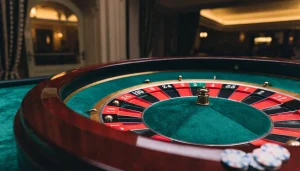
A live roulette wheel is not an image generated to resemble a casino table. A dealer spins a physical wheel, and the ball settles into one of its numbered pockets. Computerised roulette takes a different route: a Random Number Generator determines the result. The distinction is not merely decorative. One is a visible piece of apparatus in motion; the other is an electronic process presented through a screen.
Crazy Time Live Casino Game in the UK Explained
The wheel’s layout sets the terms. European Roulette has a single green pocket, marked zero. American Roulette adds a second, marked 00, on both the wheel and the betting layout. That extra pocket changes the odds: the chance of winning is one in 37 on the European layout and one in 38 on the American one. The difference looks small on a table. It is not small to the mathematics.
A straight-up bet selects one number. Other bets cover broader outcomes. In roulette, a straight-up bet carries a house edge of 2.9%, while other bets carry an edge of 2.7%. Those figures describe the game’s built-in advantage over repeated play; they do not predict what happens on a particular spin. A ball has no memory, and a run of results does not alter the next pocket.
French Roulette changes the consequence of zero for even-money bets. If the ball lands on zero, such a bet loses only half rather than the whole stake. The exception applies to that bet type; it does not turn zero into a winning number or remove the house edge from roulette as a whole. A small rule, with a considerable mathematical shadow.
European Roulette
A single green pocket (zero), providing a house edge of 2.7% on most bets.
American Roulette
Two green pockets (zero and 00), which makes the odds less favourable than the European version.
French Roulette
Includes a rule where even-money bets lose only half the stake if the ball lands on zero.
The distinction matters when “wheel” is used loosely. A live roulette wheel is a physical object spun by a dealer, while Dream Catcher’s name alone does not establish that a roulette layout, its pockets or its betting rules are involved. The word can summon a familiar casino image without supplying the rules of a particular game. Roulette’s European and American versions, meanwhile, can be compared directly because their layouts and odds are defined.
That is why the pocket count deserves more attention than the theatrical sweep of the ball. The physical wheel gives the result a visible arrival; the layout decides how often a number is available to land, and the rules decide what a bet pays when it does. In American Roulette, the extra green pocket makes the odds less favourable than on the European wheel. French Roulette offers a narrower concession on zero for even-money bets. The furniture may look much the same. The arithmetic does not.
A Review That Starts with the Rules
A review of a live-casino experience needs to distinguish the named game from the setting around it. Dream Catcher should not be described as blackjack without evidence that the game is blackjack. But live blackjack offers a useful test of what a review can establish about a table: the dealer, the cards, the interaction and the rules that shape each hand.
Chicken Road Game in UK Casinos: What to Know
In live blackjack, a human dealer handles physical cards from a standard deck while the game is streamed in real time. The aim is to finish closer to 21 than the dealer without exceeding that total. Unlike a digital game, the cards are visible in the dealer’s hands, and some tables allow communication through chat with the dealer or other players. That exchange can make the table feel social, though it does not alter the cards or the odds.
The particulars matter more than atmosphere. A careful review would say whether chat is available, whether side bets are offered, and whether players can use Bet Behind to join a hand already being played by someone else. These are possible features, not guarantees attached to every table. Their presence also does not change the central task: each hand still turns on its cards and the applicable table rules.
Blackjack retains a house edge. Staking systems such as Martingale do not remove it; increasing stakes after losses can deepen them instead. The tidy sequence imagined by a betting system has no authority over the next deal. The cards remain indifferent.
A review of Dream Catcher or any live-casino offering should therefore separate confirmed table features from assumptions borrowed from another game. A visible dealer, physical cards or chat can be described when they are actually part of the experience. Rules, side bets and Bet Behind should be checked at the specific table rather than inferred from the label “live casino”. A review that makes those distinctions is more useful than one that lets a polished stream stand in for evidence.
This is entertainment, not gambling advice.
Live Casino Summary
- Legality in the UK depends on the operator’s Gambling Commission licence
- Live games offer atmosphere and human presence but at a slower pace
- Table minimums for live games are typically higher than digital versions
- Bonus weighting for live games is often significantly lower than for slots
- A stable connection is critical to avoid interruptions in the live experience
The Demo Question: What Can Actually Be Confirmed
A request for a Dream Catcher demo can mean several things: a preview of the interface, a free-play version, or access to a live table without placing money at risk. Those are not interchangeable. A live dealer game is streamed from a studio, where a human dealer conducts play while bets are entered through an on-screen interface. That describes the format; it does not establish that a particular game offers a demo, or what kind of access one might provide.
The distinction matters because a live table is not simply a recording with buttons attached. Its action takes place in real time, and the on-screen choices connect to the event unfolding in the studio. A demonstration that showed only a static interface would tell little about the experience of following a live session. Conversely, a stream available for viewing would not, by itself, confirm that betting functions were enabled.
JetX Casino Game in the UK: How It Works
No reliable conclusion about a Dream Catcher demo mode follows from the general description of live casino games. Availability and access can depend on the particular game and the operator presenting it. A label such as “demo” should therefore be read according to what it actually offers, rather than treated as proof of a universal free-play version. The word is elastic. Marketing has long made room for elastic words.
Free access, where offered, should not be confused with real-money play. A free-play session does not produce real payouts or winnings. It may provide a way to see an interface or observe the pace of a game, but it cannot reproduce the financial consequences of staking money. Nor does familiarity with a screen change the uncertain outcome of play.
There is also a small social difference between watching and participating. In a live game, the dealer and the stream make the table feel inhabited; a free preview, if available, may expose some of that atmosphere without establishing how every feature works when money is involved. The boundary is worth keeping clear. A demonstration is not a promise of access, and a preview is not evidence of a particular Dream Catcher feature.
BetFoxx games and software providers
This discussion is for entertainment purposes only, not gambling advice. Any claim about demo availability should be judged by the specific information shown by the operator, rather than inferred from the fact that the game belongs to the live-casino format.
Before Playing Live: Limits, Terms and a Set Budget
The financial boundary of a live table is set before the first bet: its minimum, the account balance available and any conditions attached to a bonus. Live games move more slowly than their digital counterparts, but the pace does not make the money committed any less real. A stable internet connection matters too; a disrupted stream can make a live session difficult to follow.
Table minimums differ by game and operator. One specialist review reported starting points of 20p for some live roulette and baccarat tables, while blackjack tables had higher starting limits. That is a report from one review, not a dependable price list for every table. The displayed minimum is the useful figure, and it should be checked before joining.
Bonuses require a separate reading. Live play may count only modestly towards wagering requirements; some terms assign it a 10% weighting. A bonus balance can therefore take longer to clear through live games than its headline value suggests. The terms also determine which games qualify and whether other restrictions apply. A welcome offer is not spare money.
A budget set in advance should be treated as a boundary, not a target to recover after a losing session. Deposits and withdrawals belong to the same calculation, and credit cards cannot be used to fund gambling in the UK. The table minimum should fit within the planned spend without requiring another deposit or a change of limit. If it does not, that table is outside the budget.
The sums are small only in appearance. A limit is useful precisely when it survives the mood of the session.
How do you choose a live dealer casino?
Choose a casino licensed by the UK Gambling Commission if you are playing in Great Britain. Also check that your internet connection can support a real-time stream and that the table’s minimum bet suits your budget.
Is the house edge the same at live dealer casinos online?
No. It varies by game and bet: roulette straight-up bets have a 2.9% house edge, while other roulette bets have a 2.7% edge.
What is the difference between European and American Roulette?
European Roulette has one green pocket, 0, while American Roulette has two, 0 and 00. The odds of winning are 1 in 37 on European Roulette and 1 in 38 on American Roulette.
How do you play live roulette?
Place your bet through the on-screen interface, then follow the dealer as they spin a physical wheel. You win if the ball lands on a number you selected.
BetFoxx games and software providers

BetFoxx live casino guide
BetFoxx offers live casino games, including live roulette, live blackjack and live baccarat formats. Current...

Aviator Casino Game in the UK: How Sites Differ
The guide distinguishes UKGC-licensed casinos from offshore platforms and examines play options, bonus terms, chance...

3-Reel Slots in the UK: Classic Format Explained
The familiar reel layout is a digital format, not a physical fruit machine, and it...

5-Reel Slots in the UK: How They Work
Five-reel slots bring symbols together across a shared field, while demo play, bonus features and...

Bonus Buy Slots UK: Demo Play, Rules and Features
A practical look at demo play, feature controls, slot variance and how bonus-buy options shape...

Fast Payout UK Casinos: What Keno Paytables Tell You
Keno’s paytable sets possible prizes from picks and catches, while casino withdrawal processing is a...

First-Deposit Casino Bonuses in the UK: What to Know
A first deposit links an account payment to a promotion, while eligibility, bonus value and...

High-Volatility Slots in the UK: What to Know
Volatility describes how returns are distributed over play, from frequent smaller wins to less frequent,...

Highest RTP Slots in the UK: How to Assess Claims
RTP can compare expected returns over extensive play, but it cannot predict an individual session...

Keno Casinos in the UK: Games, Odds and Play
Keno uses a shared field of 80 numbers, but game formats, selection sizes and paytables...

Live Casino in the UK: How Online Tables Work
A live casino combines a streamed table with online controls, while payment rules, game formats...

Low-Volatility Slots in the UK: How They Work
Low volatility tends to mean smaller, more frequent wins, but it does not promise a...

Online Slot Payout Percentages and What RTP Means
The percentage describes expected returns across repeated play, not a guaranteed share back on any...

Progressive Jackpot Slots: How the Prizes Grow
Progressive prizes grow from qualifying wagers, unlike fixed slot payouts that follow the values set...

RTP Casino Slots UK: How Long-Run Returns Work
RTP describes a slot’s theoretical share of stakes returned as prizes over many plays, not...

Video Slots UK: Reels, Rules and How They Play
Reels, paylines and bonus features determine how slot results are formed and how play moves...

UK Casino Dice Games: How Digital Play Works
Some online dice-style games use random-number processes to determine outcomes, while on-screen animations give those...

Chicken Road Game in UK Casinos: What to Know
A practical guide to the slot label, online play, demo limits, casino rewards and the...

Classic Slots Online in the UK: How They Work
Explore familiar reel layouts, symbols, features and browser play, while keeping in mind that classic...

Crash Casino Games in the UK: Rules and Fairness
The guide distinguishes UK-licensed casinos from offshore platforms and explains how offers, game mechanics, fairness...

Crazy Time Live Casino Game in the UK Explained
A guide to the live studio format, casino interfaces, bonus terms and the limits of...

Deal or No Deal Casino UK: How the Game Works
The article traces the game from its television origins to online play, clarifying what demos,...

Fastest Payout Online Casino UK: What Can Be Proven
A meaningful speed comparison needs a defined event, start and end points, and equivalent terms...

French Roulette Online Casinos in the UK: Rules
French roulette pairs a 37-pocket wheel with rules such as La Partage, while online formats...

Fruit Machine Slots in the UK: From Pubs to Online
The guide traces familiar fruit-machine features into digital play, including reels, symbols, holds, nudges and...

Hi-Lo Casino UK: Rules, Ties and Online Play
Hi-Lo rules vary: ties may lose or have their own wager, while online and live...

Jackpot Mobile Casinos in the UK: A Practical Guide
Jackpot labels can describe different prize structures, while mobile play, promotions and payment terms shape...

JetX Casino Game in the UK: How It Works
A closer look at JetX’s crash-game format, randomness, casino offers, platform protections and the limits...

Live Casino Lightning Roulette in the UK
A physical dealer-spun wheel supplies the result, while the stream and betting interface bring the...

Live Baccarat Online Casino UK: Rules and Tables
Baccarat compares Player and Banker hands against nine, with dealing rules shaping how each round...

Live Blackjack Online in UK Casinos: What to Know
Live play has a slower rhythm and higher minimum bets, while table options, trust checks...

Mines Casino Game in the UK: Rules, Risk and Play
The guide separates demo and real-money play, explains casino randomness, and sets out what UK...

Monopoly Live Casino UK: How Live Play Works
A practical look at the studio stream, operator suitability, game mechanics, demo play and the...

Online Bingo UK: Tickets, Patterns and Slot Games
Bingo formats, ticket stakes and slot games are explained alongside the steps from buying a...
American Roulette at UK Online Casinos: Rules and Odds
The double-zero wheel changes the table layout and the odds behind familiar roulette bets. The...

Online European Roulette in UK Casinos: Rules and Odds
A practical guide to European roulette, from its single-zero wheel and payouts to live play,...

Online Casino Games for Real Cash in the UK
Learn how slot stakes and paylines shape outcomes, and why payout routes, licence status and...

Online Casino Tournaments UK: Free Entry Explained
Free-entry events remove the buy-in, while shared rules and comparable results keep the competition intact....

Online Casinos Without ID in the UK: What It Means
A UK licence requires identity and age checks, even when a casino does not request...

Penny Slots in the UK: Stakes, Free Play and RTP
A game’s penny label does not set its stake; this guide explains cash play, practice...

Plinko Casino UK: Games, Rules and Real-Money Play
Plinko labels can cover different casino formats, while a site's availability alone does not prove...

Progressive Slots Online in the UK: How They Work
Network pooling, jackpot triggers, RTP and bonus terms all affect how progressive slots work and...

UK Slot Casino Sites: Licensing, Costs and Play
Licensing, game providers, payout terms and account safeguards offer a clearer basis for assessing UK...

Live Roulette UK: How the Dealer Game Works
Live roulette shows a dealer spinning a physical wheel, while bets are placed through an...